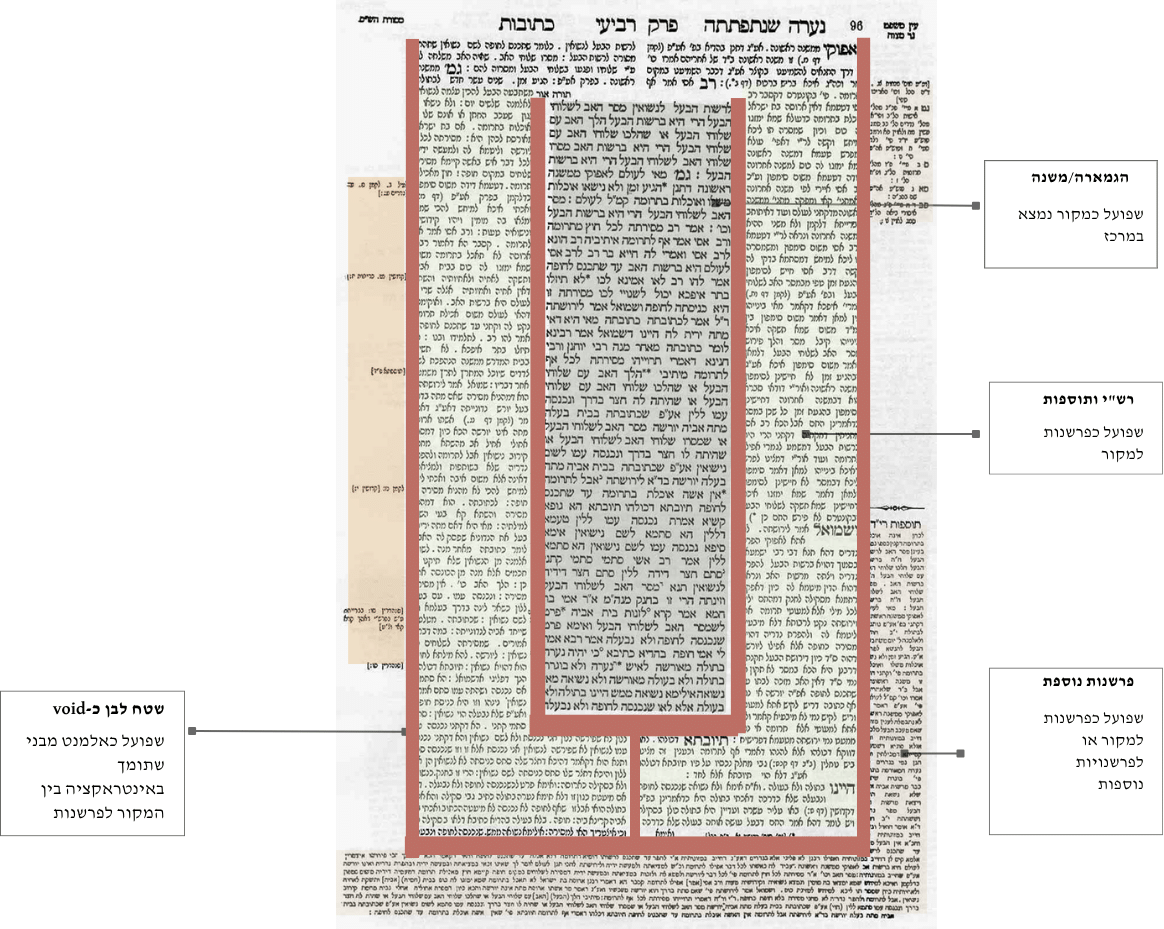
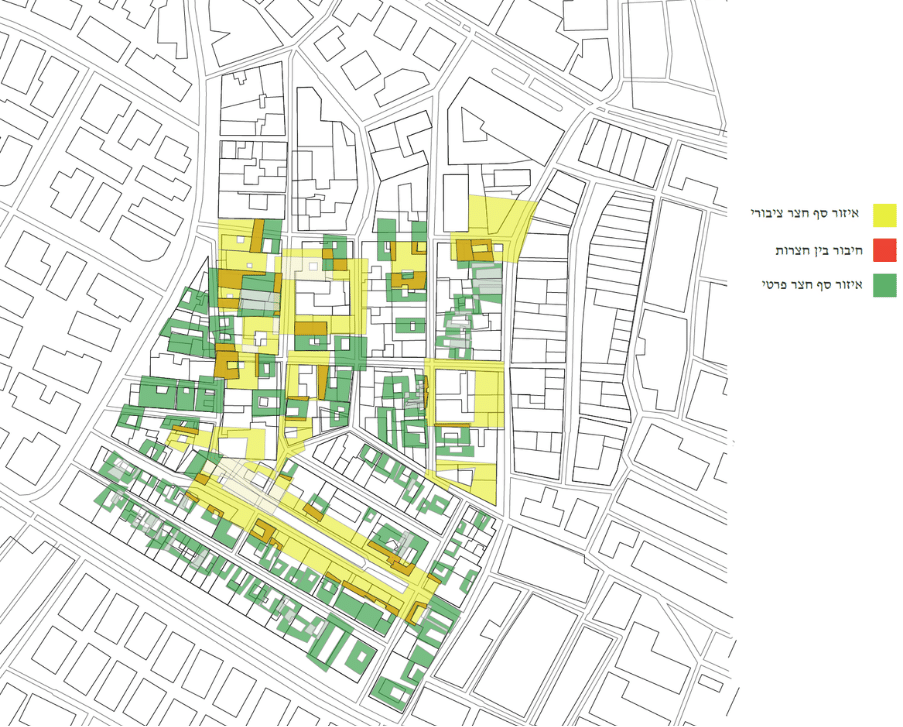
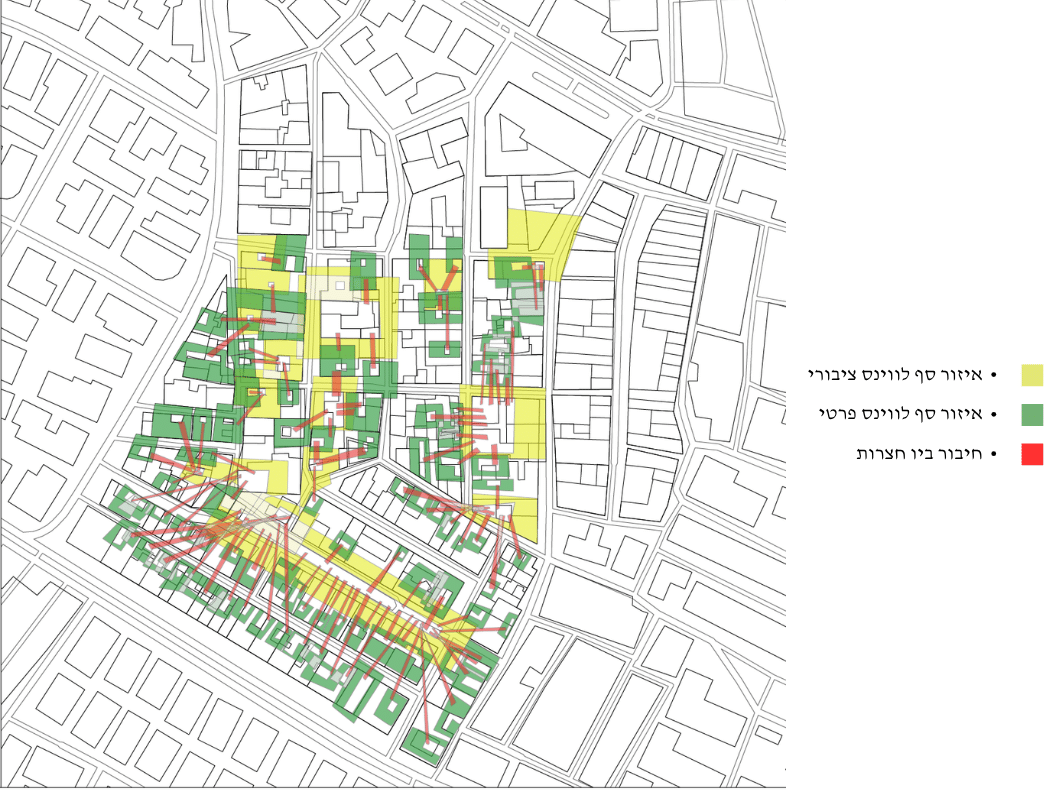
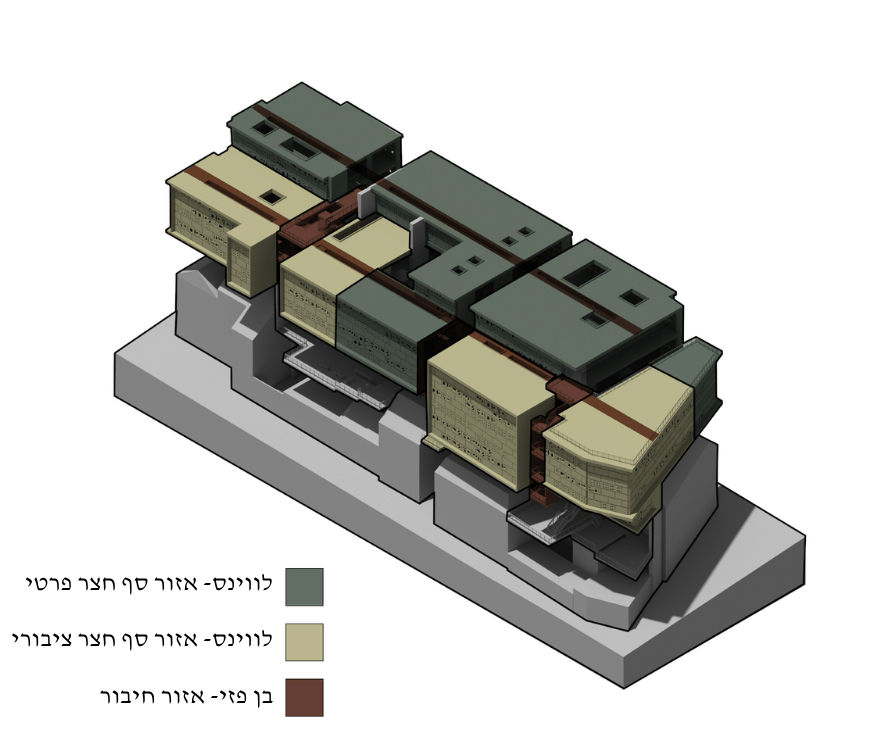
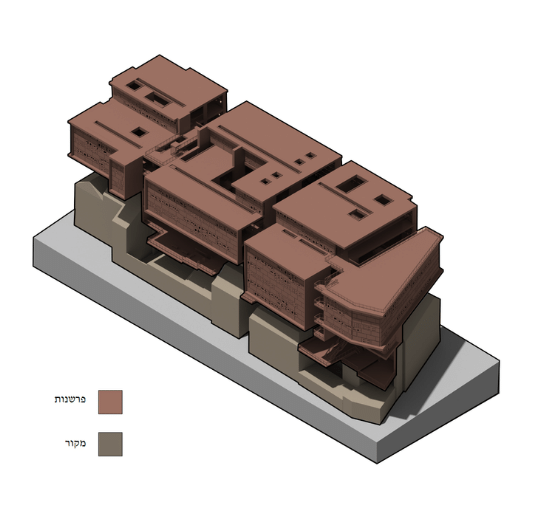
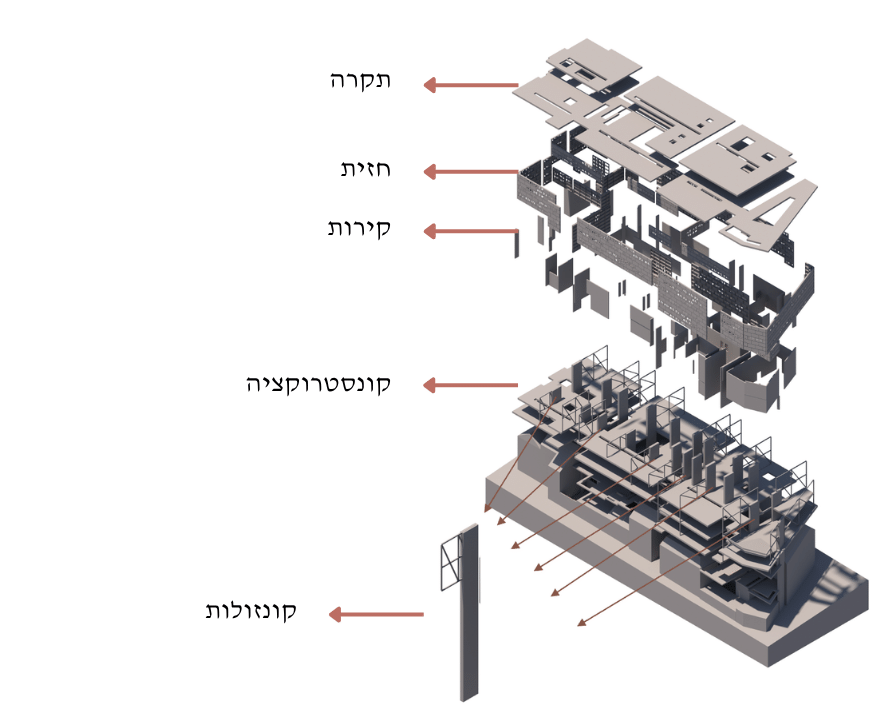
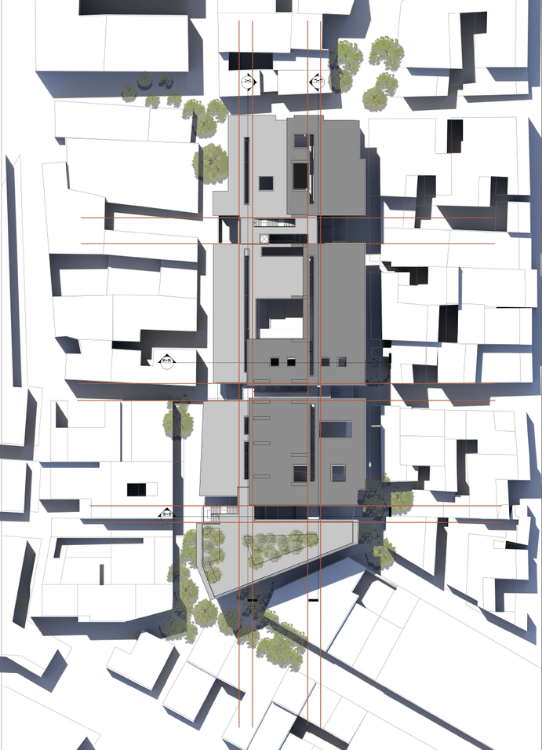
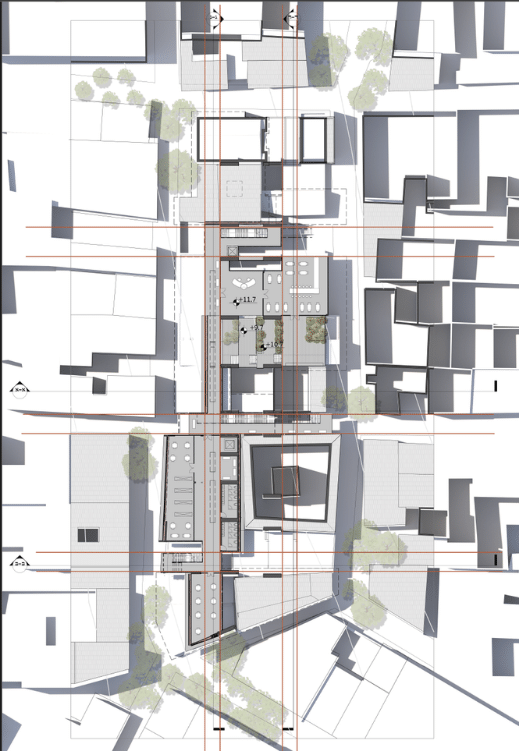
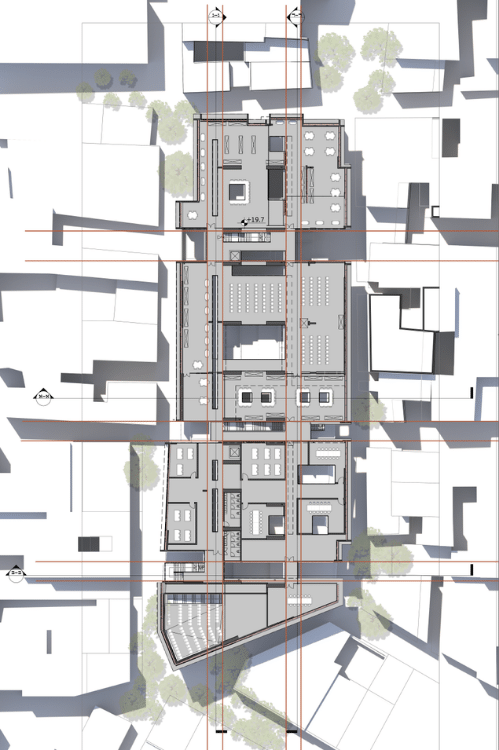
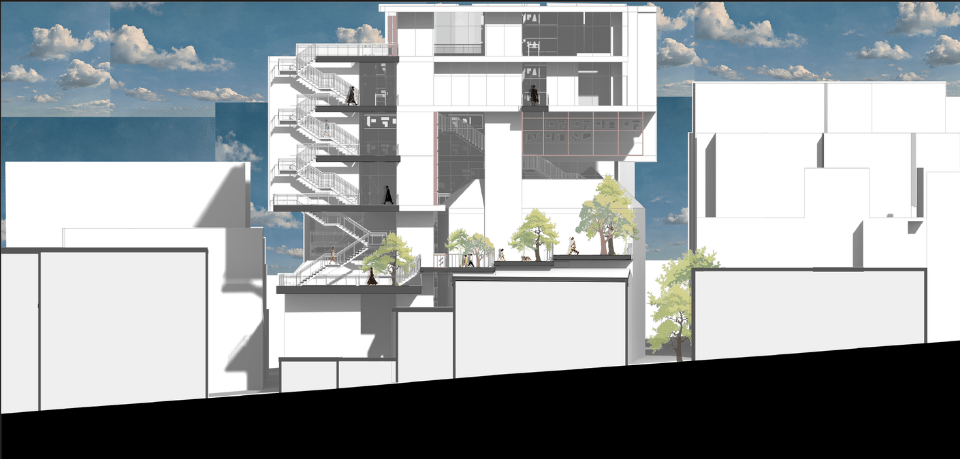
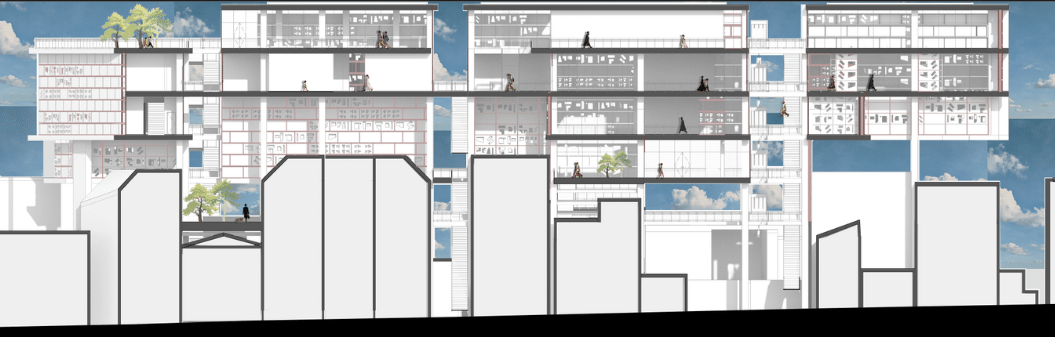
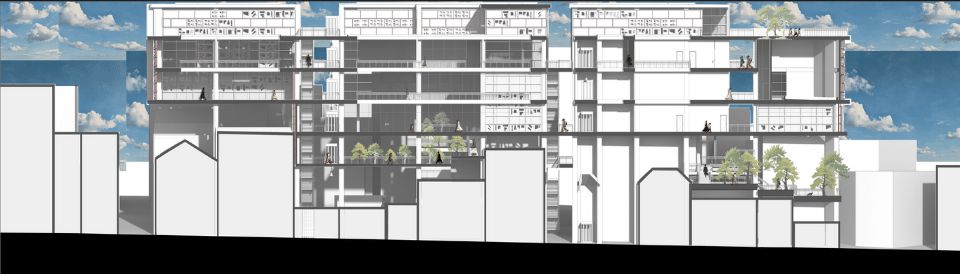
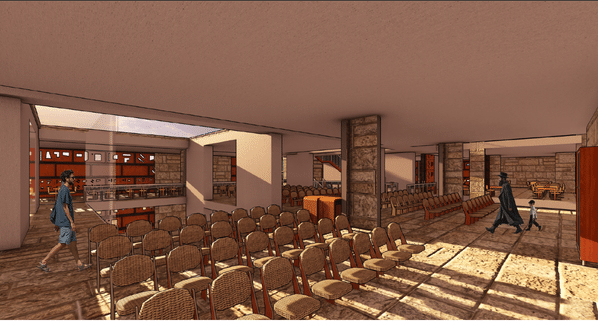
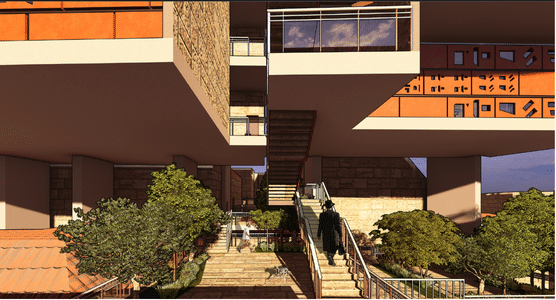
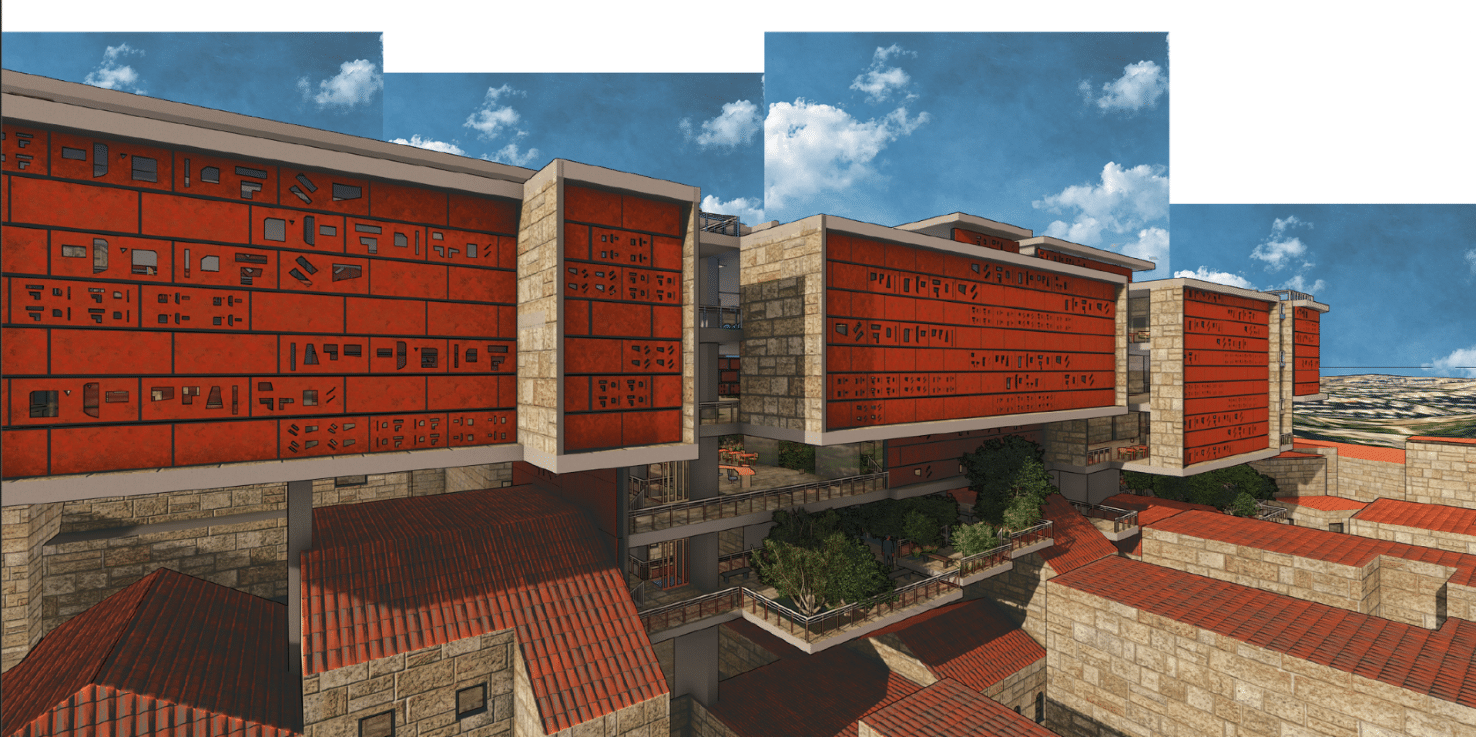
החברה הישראלית העכשווית מאופיינת בשסעים חברתיים, דתיים, פוליטיים ותרבותיים עמוקים. ההתרחקות הגוברת בין הקהילות מצמצמת את ההזדמנויות למפגש ולדיאלוג, ומחזקת את הגבולות המפרידים ביניהן. במציאות מפוצלת זו, הפנייה אל השפה העברית, המשותפת לקהילות השונות, מציעה הזדמנות לגלות מחדש בסיס תרבותי משותף. באמצעות ניתוח מרחבי של טקסטים עבריים מסורתיים — ספר התורה, החומש והגמרא — לצד חקר בתי כנסת עתיקים וטקסים קהילתיים, המחקר בוחן את היחסים שבין המקור לפרשנות. דגש מיוחד ניתן לתפקידו של ה״חלל״, הן בטקסט והן במרחב, כאלמנט מארגן המפריד, מחבר ומאפשר את קיומן המשותף של פרשנויות שונות. בהסתמך על הגותם של עמנואל לוינס וחנוך בן־פזי, הפרויקט מתייחס לחלל לא רק כהיעדר, אלא כמרחב של אפשרות, המאפשר לפרשנויות שונות להתקיים זו לצד זו מבלי לטשטש את ההבדלים ביניהן. עקרונות אלו מנחים את פיתוחה של מערכת אדריכלית המזהה ומייצרת מרחבים חדשים למפגש ולפרשנות. שכונת נחלאות ההיסטורית בירושלים נבחרה כאתר ההתערבות בזכות ההיסטוריה רבת־השכבות שלה, המרקם העירוני הייחודי, הארגון המרחבי המבוסס על חצרות וההרכב החברתי המגוון. המתחם המוצע מתרומם מעל המרקם העירוני הקיים ומוסיף לו שכבה אדריכלית חדשה, הנתמכת במספר מצומצם של אלמנטים קונסטרוקטיביים. התנועה במתחם מאורגנת סביב שני צירי תנועה ליניאריים הנעים בין מפלסים שונים, ויוצרים נקודות מפגש והזדמנויות למפגשים בלתי מתוכננים. לצירים אלו מתווספים חללים פתוחים ומשותפים המעודדים אינטראקציה בין הקהילות השונות. הפרוגרמה משלבת חללים המוקדשים לשימור ולחידוש התרבות העברית, ובהם ספריות לטקסטים מקודשים ולספרות עברית מודרנית, מרחבי לימוד ודיון, ושני בתי כנסת המיועדים לקהילות שומרות מצוות ולציבור שאינו שומר מצוות. בסופו של דבר, הפרויקט אינו מתיימר לפתור את השסעים בחברה הישראלית, אלא מבקש ליצור מסגרת מרחבית למפגש, שבה הבדלים יכולים להתקיים זה לצד זה, פרשנויות יכולות לנהל דיאלוג, והשפה המשותפת יכולה לשמש בסיס לתהליך הדרגתי של התקרבות ופיוס.
Contemporary Israeli society is characterized by deep social, religious, political, and cultural divisions. The growing distance between communities has reduced opportunities for encounter and dialogue, reinforcing the boundaries that separate them. In this fragmented context, turning to Hebrew, a language shared across these communities, emerges as an opportunity to rediscover a common cultural foundation. Through a spatial analysis of traditional Hebrew texts—the Torah scroll, the Chumash, and the Gemara—alongside the study of ancient synagogues and communal rituals, the research explores the relationship between source and interpretation. Particular attention is given to the role of the void, both textual and spatial, as an organizing element that separates, connects, and sustains the coexistence of different interpretations. Drawing on the philosophical ideas of Emmanuel Levinas and Hanoch Ben-Pazi, the project understands the void not merely as an absence, but as a space of possibility that allows different interpretations to coexist without erasing their distinctions. These principles inform the development of an architectural system that identifies and generates new spaces for encounter and interpretation. Nachlaot, a historic neighborhood in Jerusalem, was selected for its layered history, distinctive urban fabric, courtyard-based spatial organization, and diverse social composition. The proposed complex rises above the existing urban fabric, introducing a new architectural layer supported by a limited number of structural elements. Its circulation is organized around two primary linear routes that shift between levels, creating intersections and opportunities for unexpected encounters. These are complemented by open and shared spaces that encourage interaction between different communities. The program combines spaces dedicated to the preservation and renewal of Hebrew culture, including libraries for sacred texts and modern Hebrew literature, spaces for learning and discussion, and two synagogues serving observant and non-observant communities. Ultimately, the project does not seek to resolve the divisions within Israeli society, but rather to establish a framework for encounter, where differences can coexist, interpretations can engage in dialogue, and a shared language can become the foundation for a gradual process of reconciliation.