ההתחממות הגלובלית אינה רק תרחיש עתידי, אלא מציאות שמשנה את תנאי החיים בעיר. העלייה בעומסי החום מחייבת לחשוב מחדש על האופן שבו בניינים ומרחבים ציבוריים מתוכננים, כך שיספקו לא רק דיור אלא גם צל, אוורור, צמחייה ותנאים נוחים לשהייה. במקביל, ההתחדשות העירונית בישראל מתמודדת עם התיישנות המבנים ועם הצורך בהוספת יחידות דיור, אך המענה המקובל לכך הוא לעיתים קרובות הריסה ובנייה מחדש. הריסה כזו מוחקת לא רק את הבניינים, אלא גם חומר ואנרגיה שכבר הושקעו, תשתיות, זיכרונות, זהות מקומית וקהילה שלמה שחיה במקום. מכאן עולה השאלה: האם ניתן לחדש ולצופף שכונה, להתאים אותה לאקלים המשתנה ולשפר את איכות החיים – מבלי למחוק את מה שכבר קיים בה?
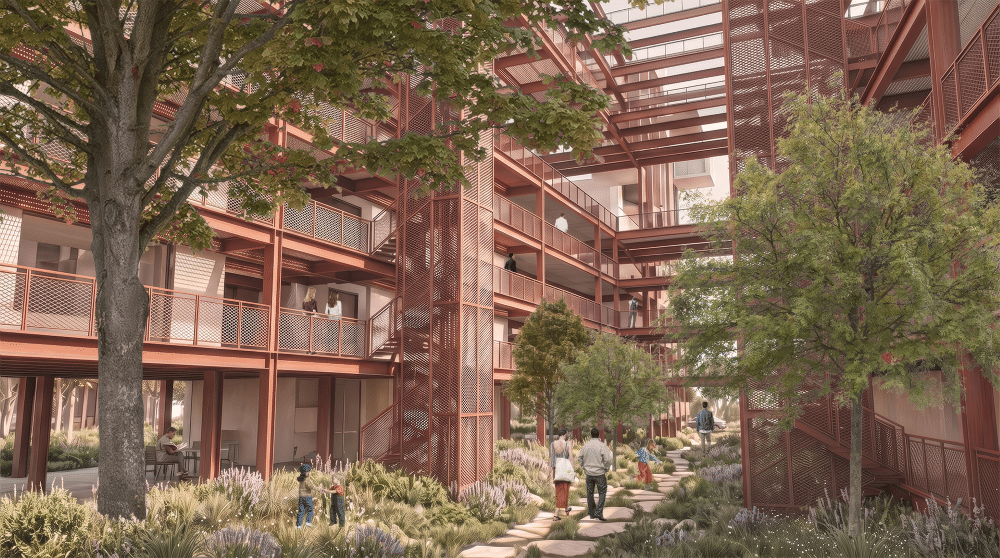
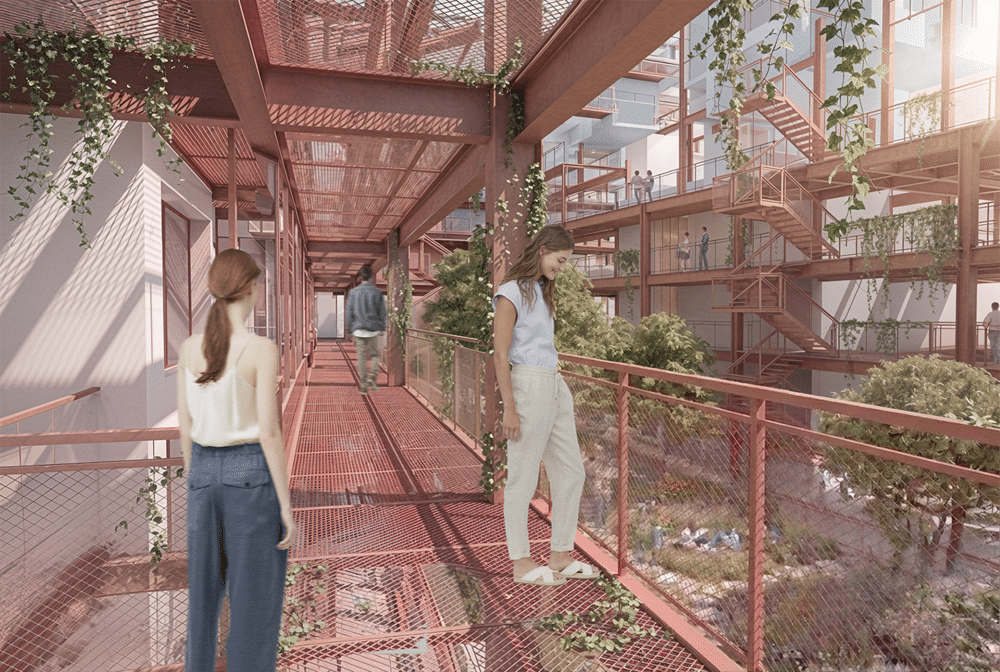
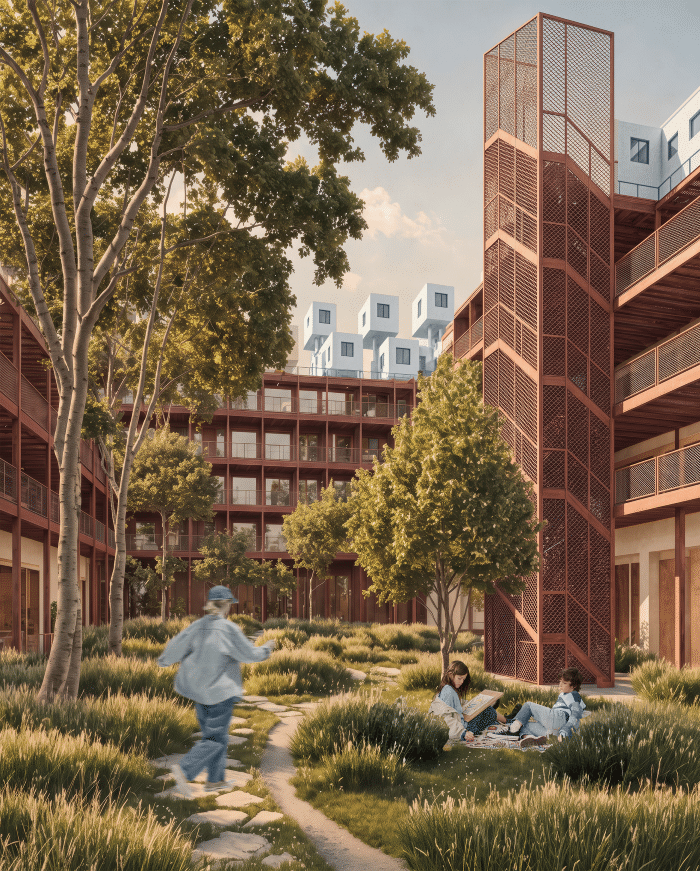
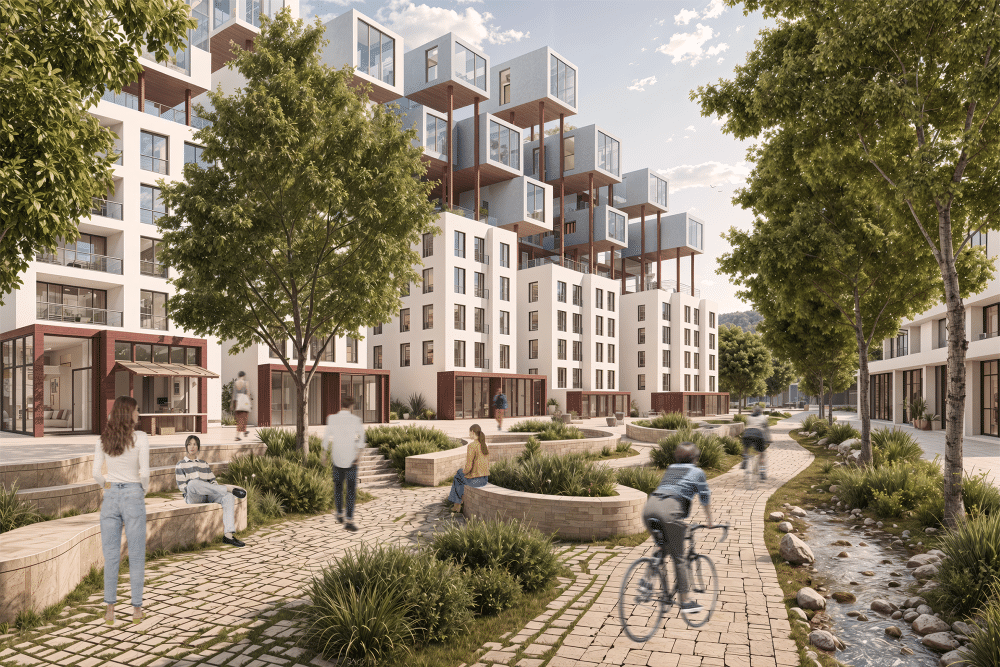
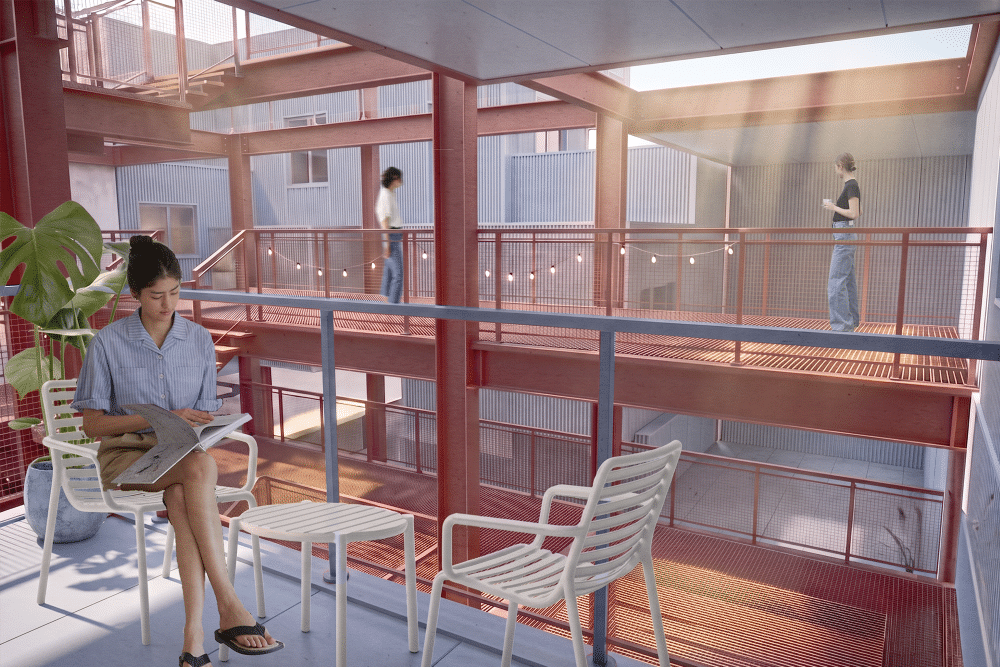
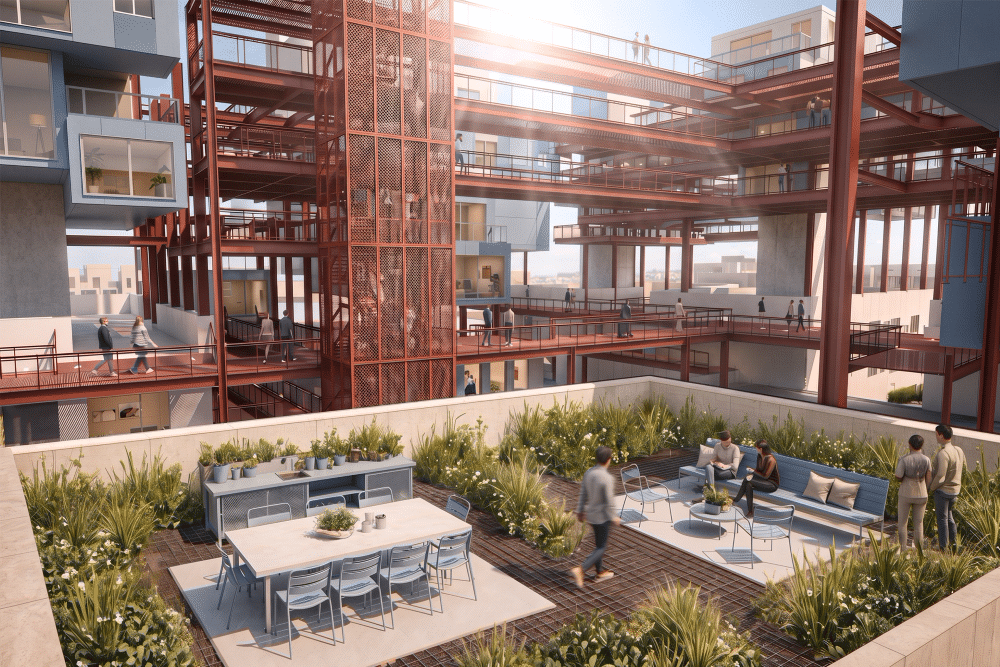
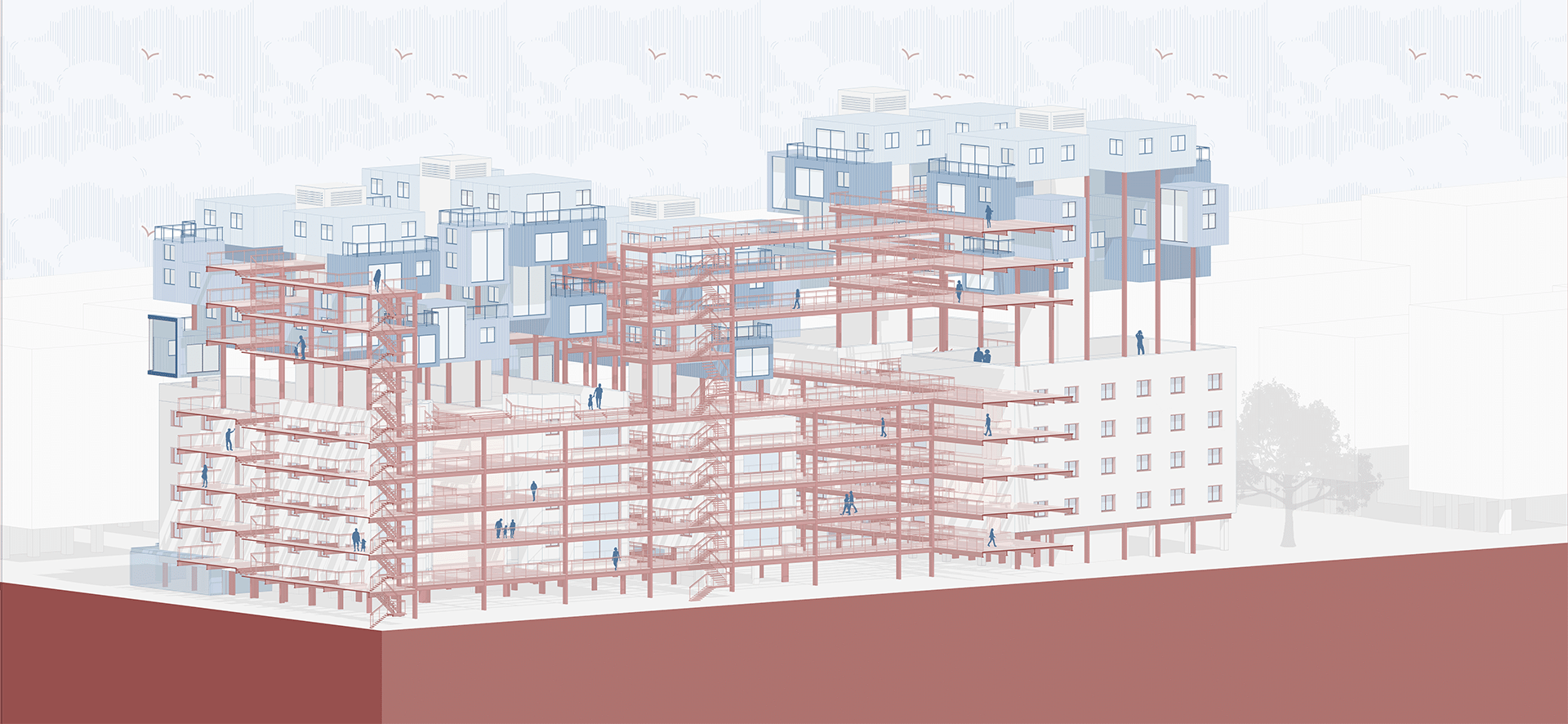
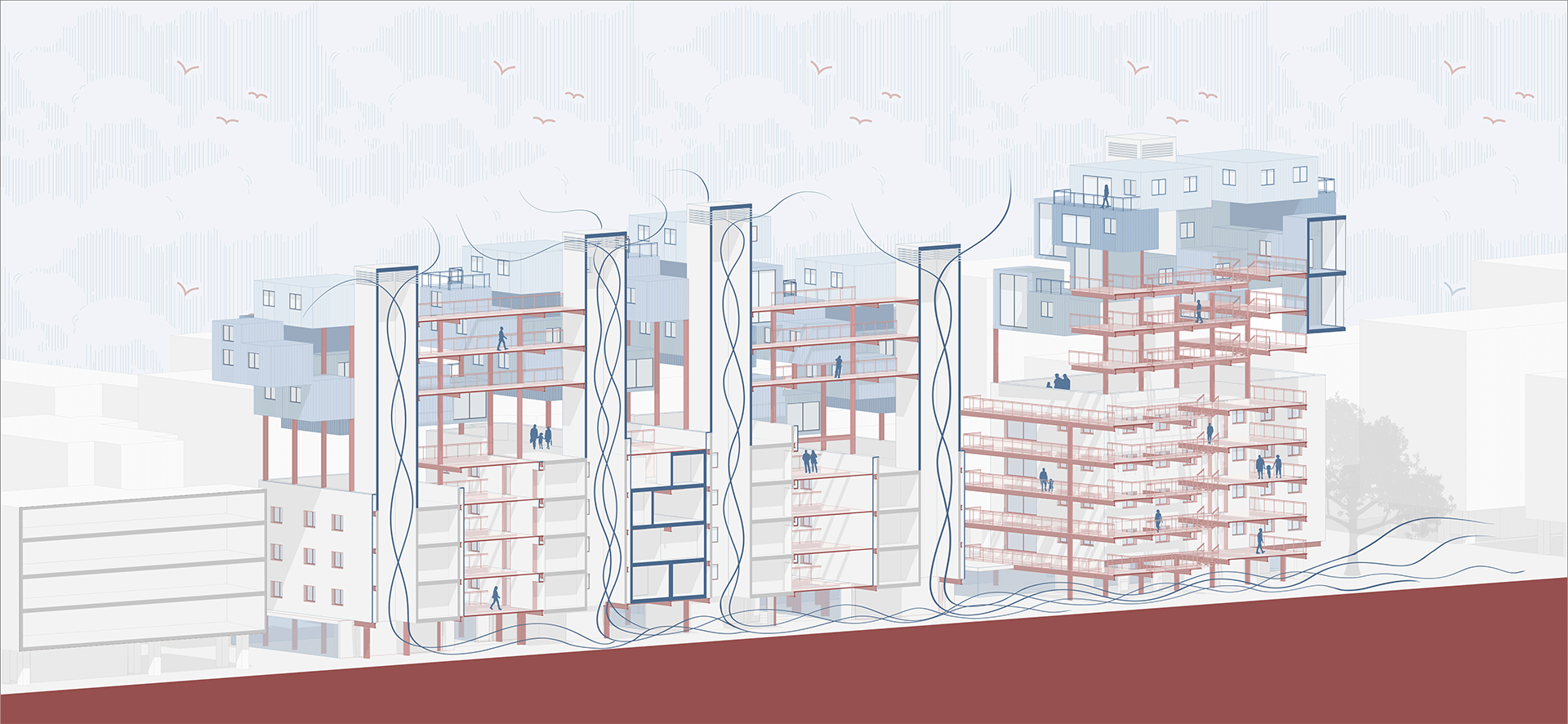
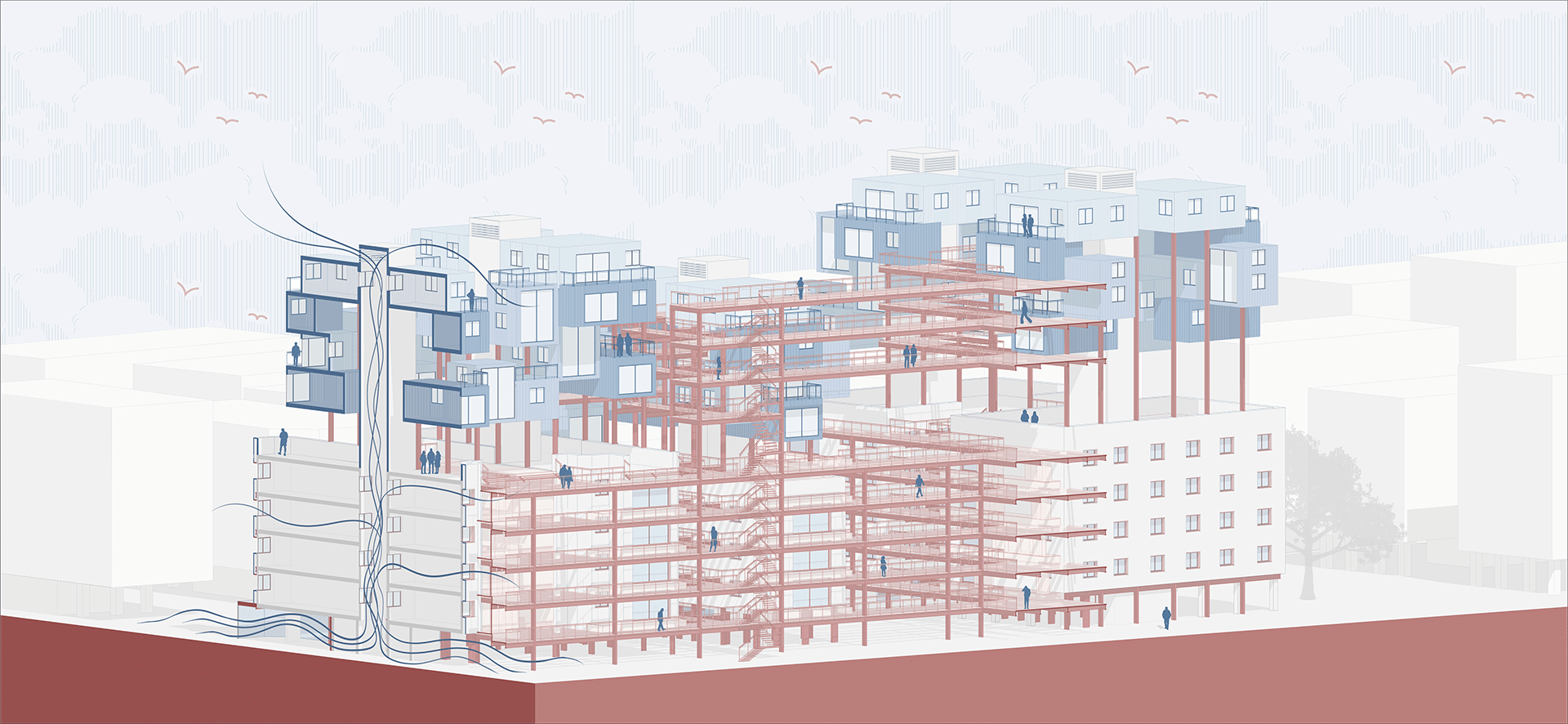
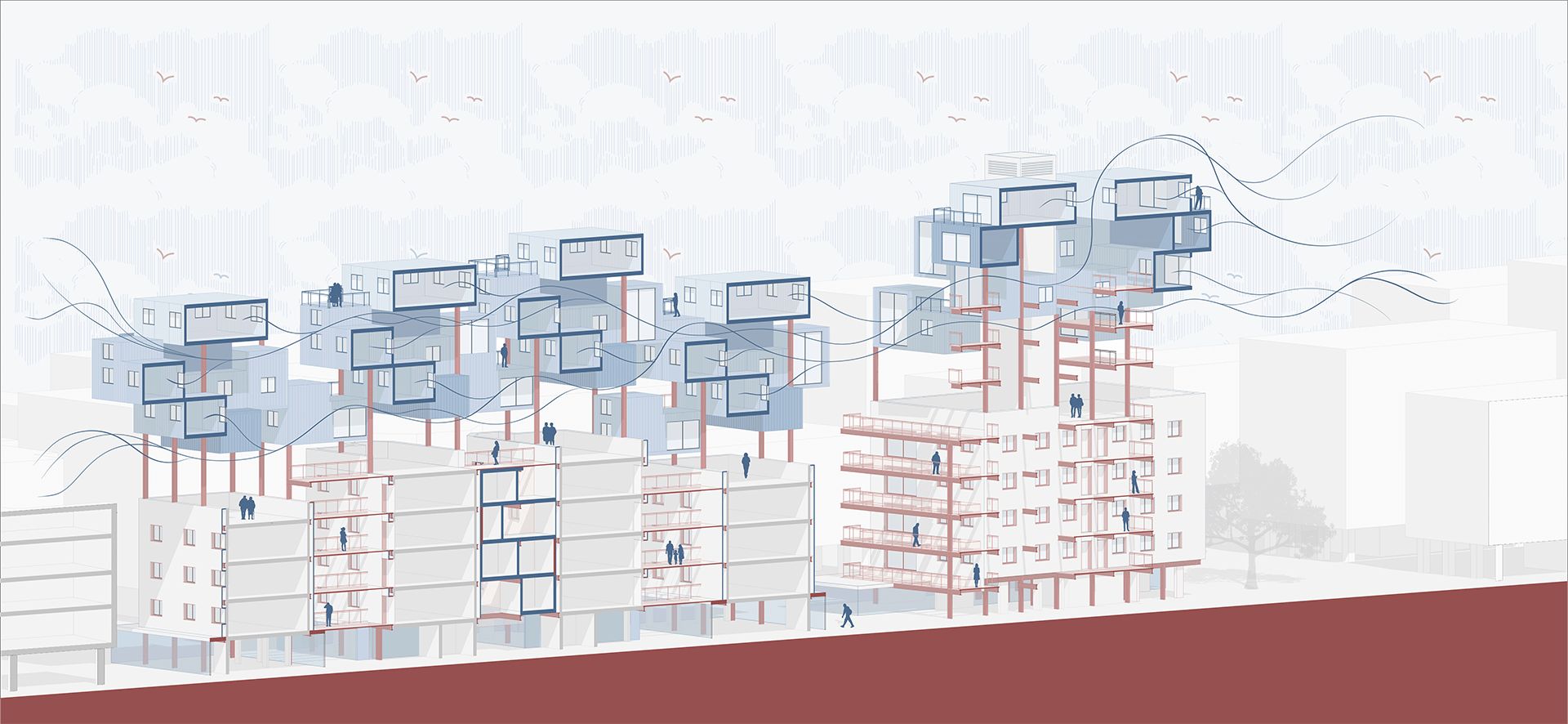
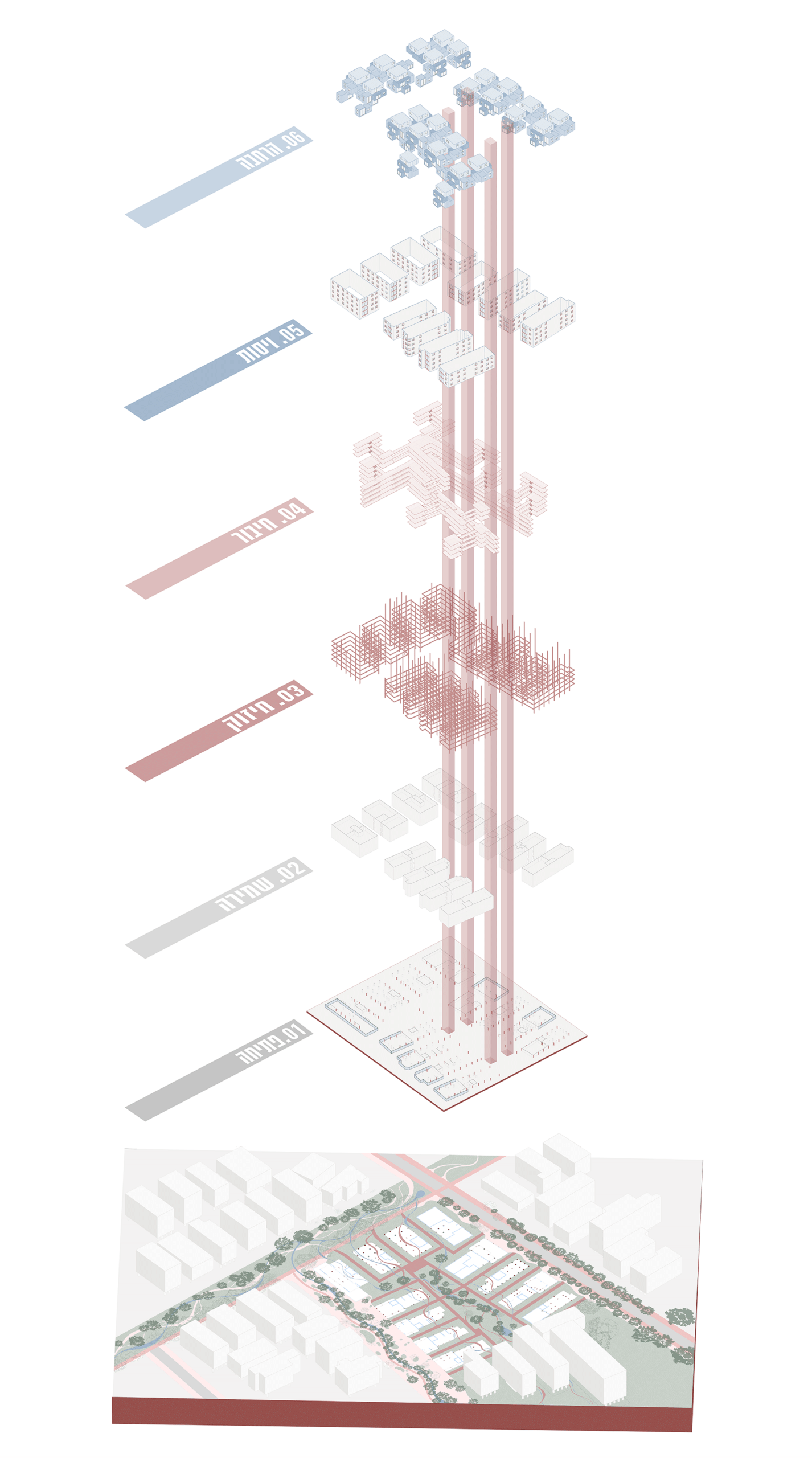
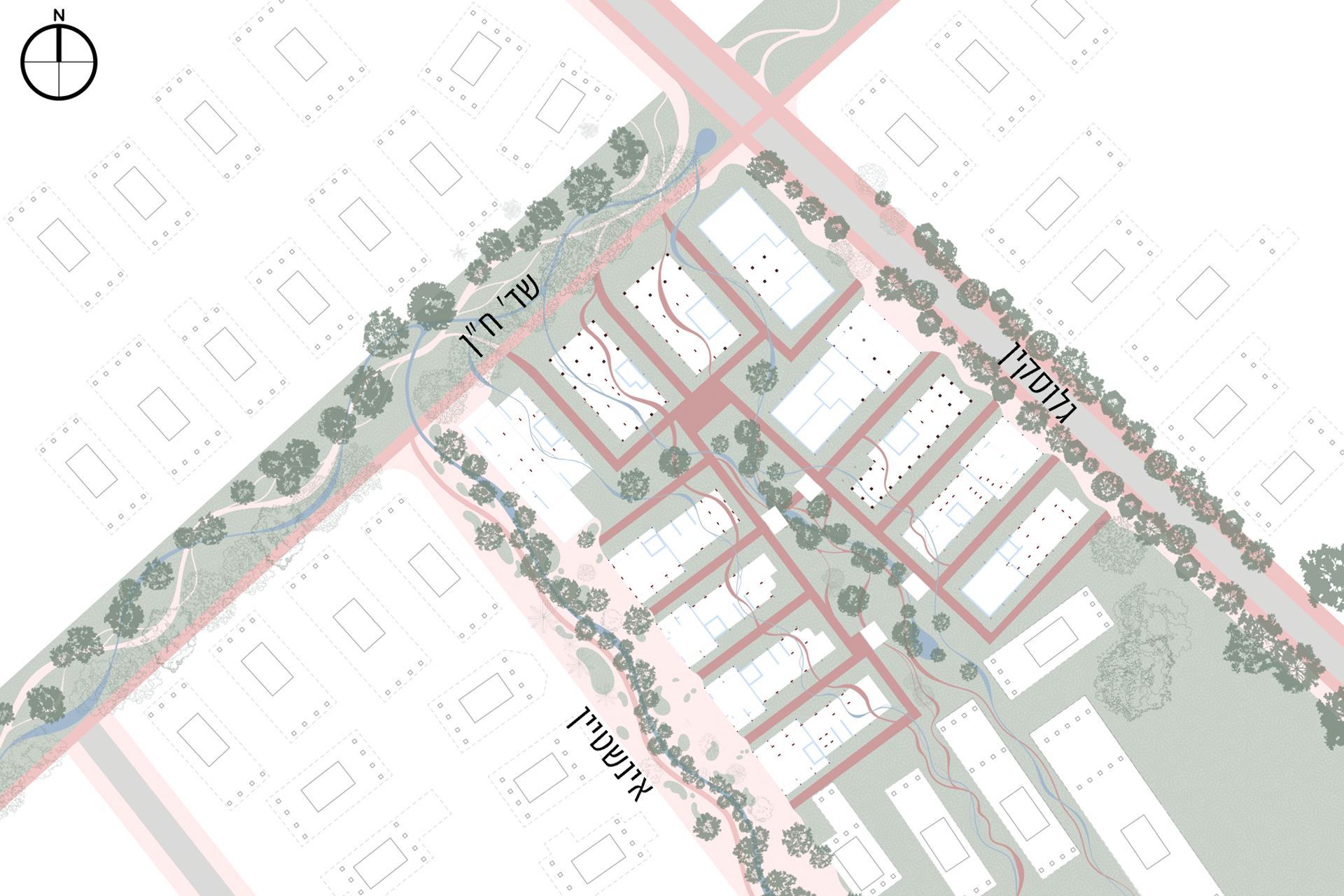
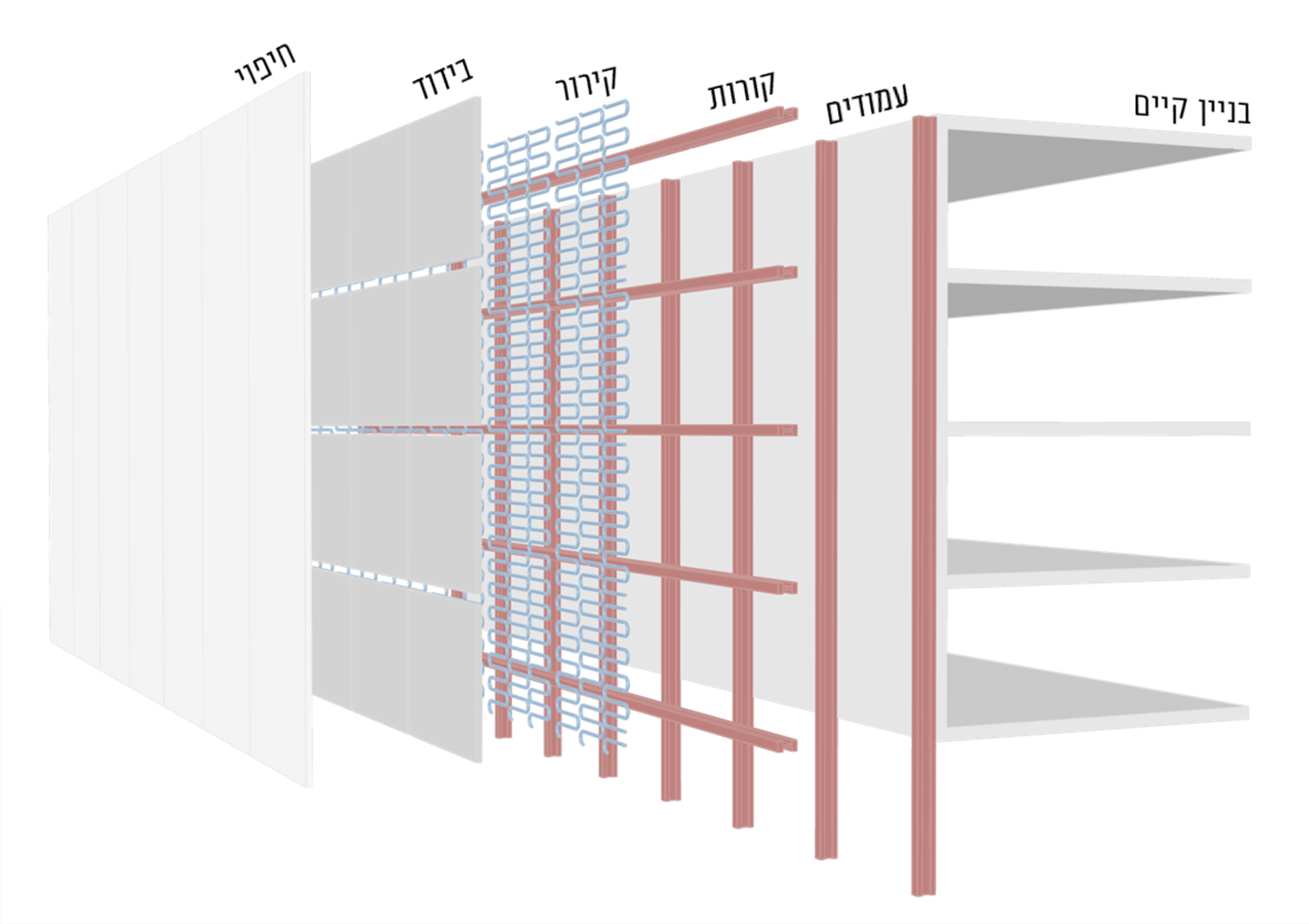
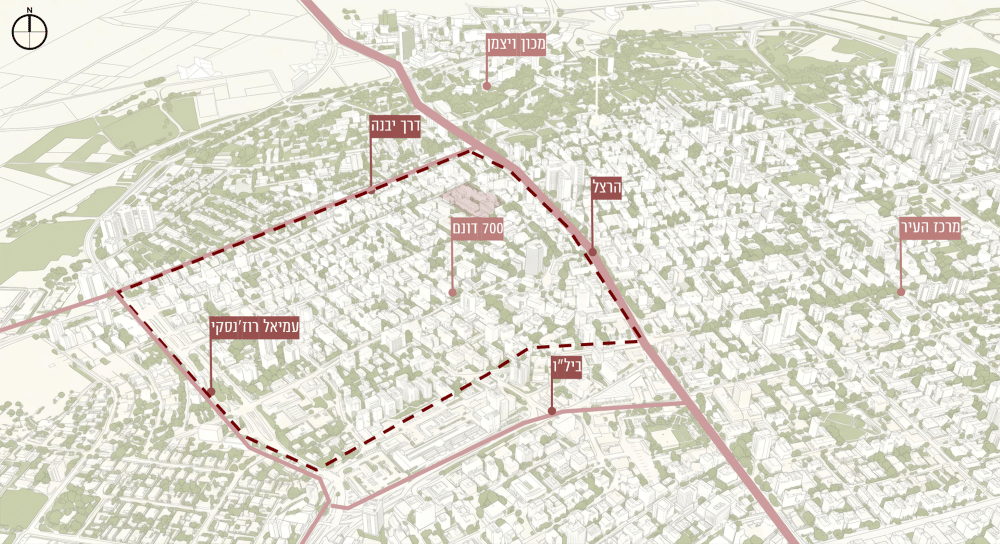
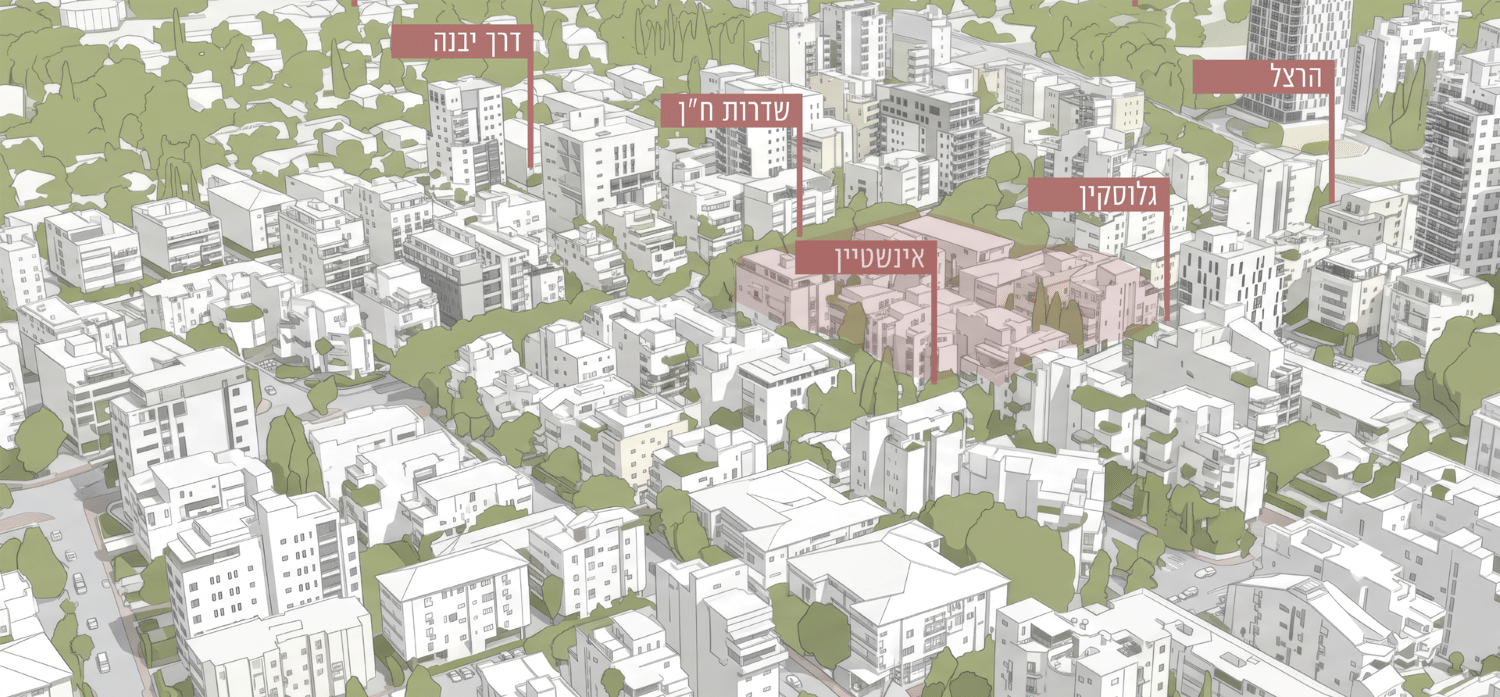
פרויקט 'לשם שינוי' מציע תשובה דרך התחדשות אקלימית של שכונת נווה אילן ברחובות. במקום להחליף את השכונה, הפרויקט מוסיף לה שכבות חדשות של מגורים, אקלים ומרחב משותף, תוך שמירה על הבניינים ועל הקהילה שחיה בהם. הבניינים מתעבים מלמעלה באמצעות תוספות חדשות ומערכות הצללה ואוורור, והמרחבים שביניהם הופכים לרשת של צל, אוויר, צמחייה ומים – מרחבים שמאפשרים הליכה, שהייה, מפגש וחיי קהילה. כך האקלים אינו רק פתרון טכני, אלא תשתית חברתית שמחברת בין הדירה, הבניין, הקרקע והשכונה. נווה אילן גדלה מבלי להיעלם, ונוצרת התחדשות שמוסיפה דיור ואיכות חיים בלי לעקור את הקהילה שכבר קוראת למקום הזה בית.
Global warming is no longer a future scenario, but a reality that is changing the conditions of urban life. As heat stress intensifies, we must rethink the way buildings and public spaces are designed so that they provide not only housing, but also shade, ventilation, vegetation, and comfortable conditions for staying outdoors. At the same time, urban renewal in Israel is confronting an aging building stock and the need to add housing units, yet the common response is often demolition and reconstruction. Such demolition erases not only the buildings themselves, but also the material and embodied energy already invested in them, existing infrastructure, memories, local identity, and an entire community that lives there. This raises the question: Can a neighborhood be renewed and densified, adapted to a changing climate, and improved in terms of quality of life – without erasing what already exists?
'For a Change' offers an answer through the climate-responsive renewal of Neve Ilan, a neighborhood in Rehovot. Rather than replacing the neighborhood, the project adds new layers of housing, climate infrastructure, and shared space while preserving the existing buildings and the community that lives there. The buildings are expanded upward through new additions and systems of shading and ventilation, while the spaces between them become a network of shade, airflow, vegetation, and water – spaces that support walking, staying, meeting, and community life. In this way, climate is not merely a technical solution, but a form of social infrastructure that connects the apartment, the building, the ground, and the neighborhood. Neve Ilan grows without disappearing, creating a form of renewal that adds housing and quality of life without displacing the community that already calls this place home.