הליכה היא עוגן — מרחב של שקט בתוך מציאות רועשת. עבורי, המרחב הפתוח תמיד היה מזוהה עם חופש, נשימה והאטה, אך עם פרוץ המלחמה אותה פתיחות הפכה גם למקור של חשיפה וחוסר ביטחון. המתח שבין חופש להגנה הפך לנקודת המוצא של הפרויקט.
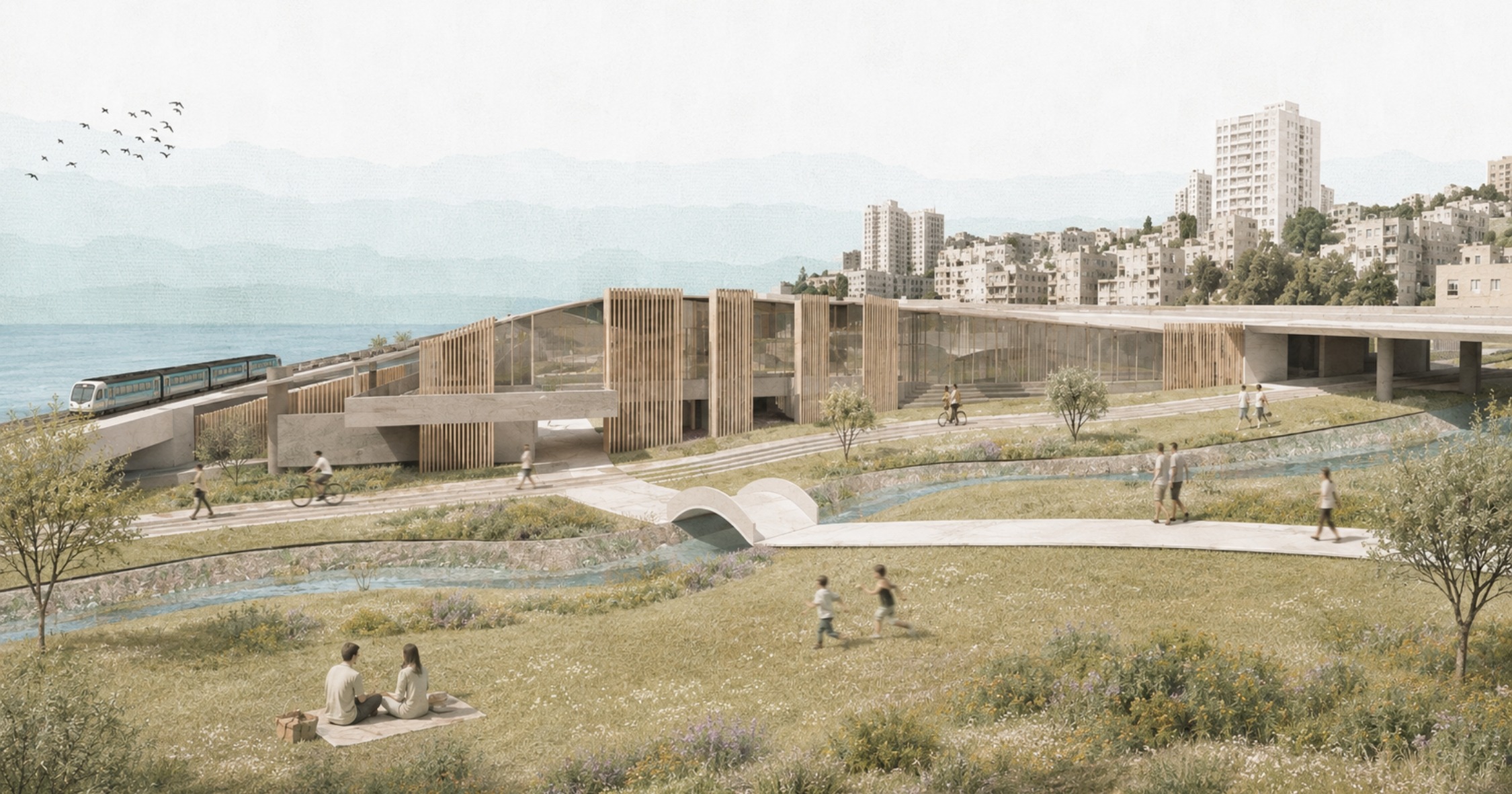
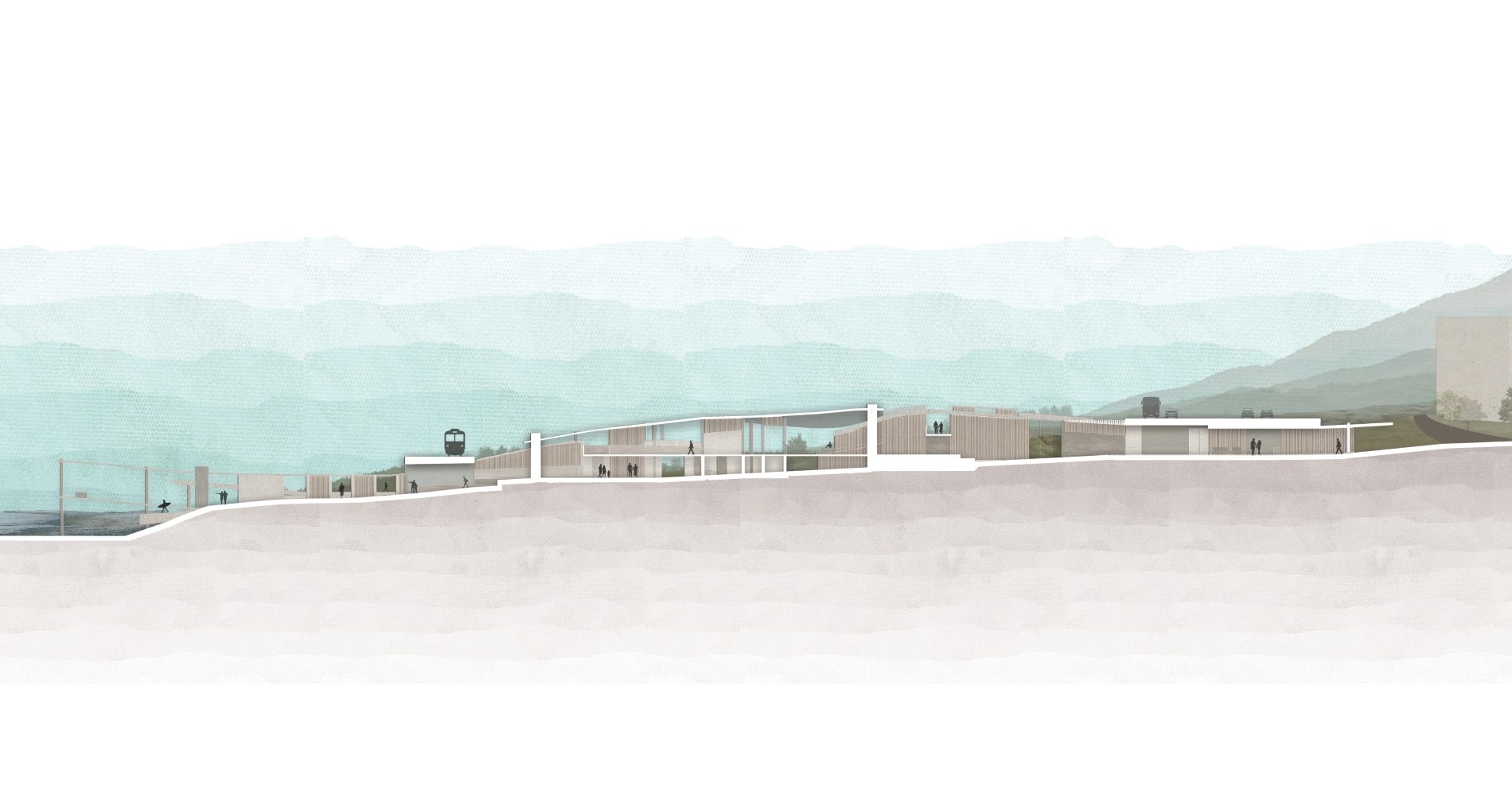
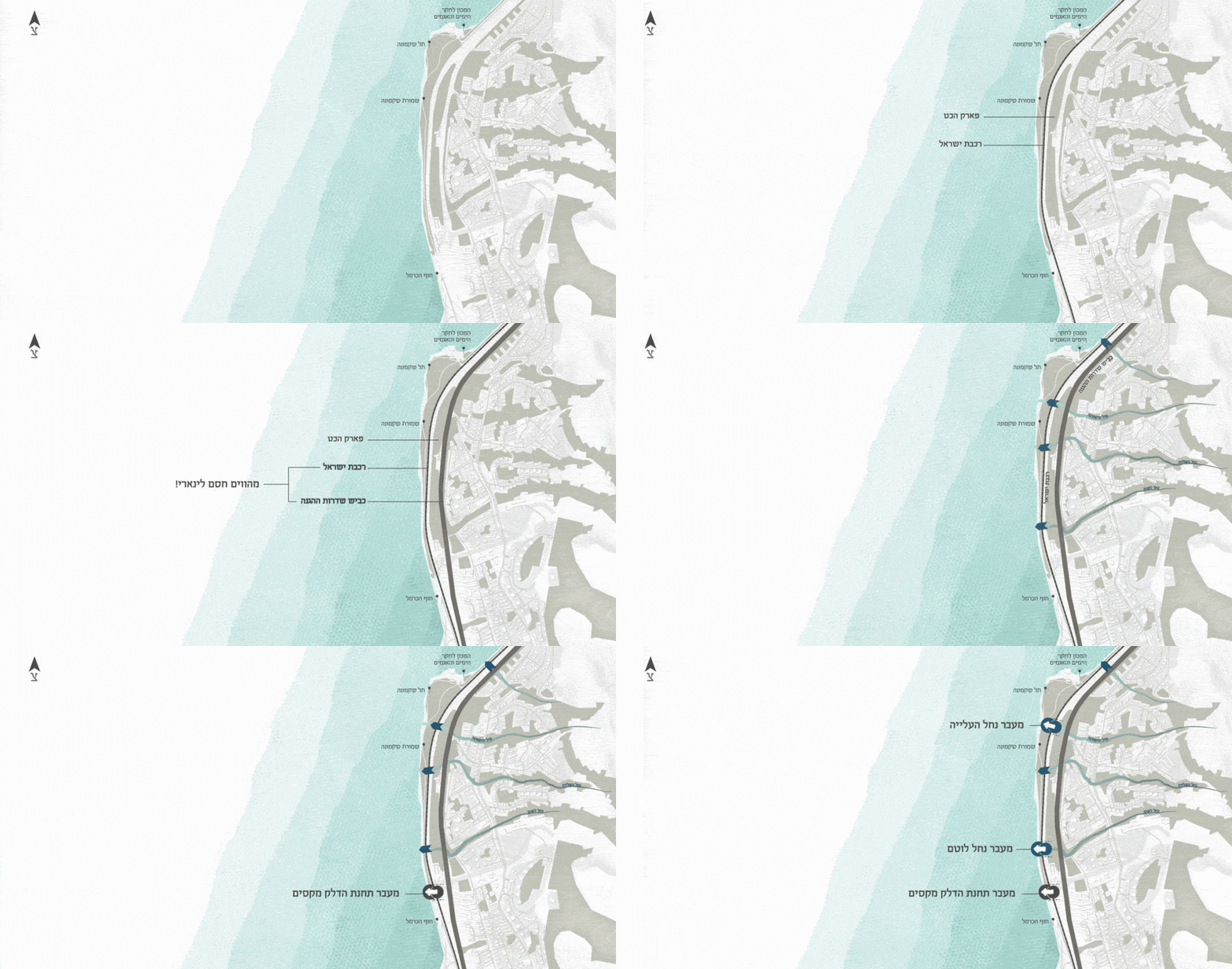
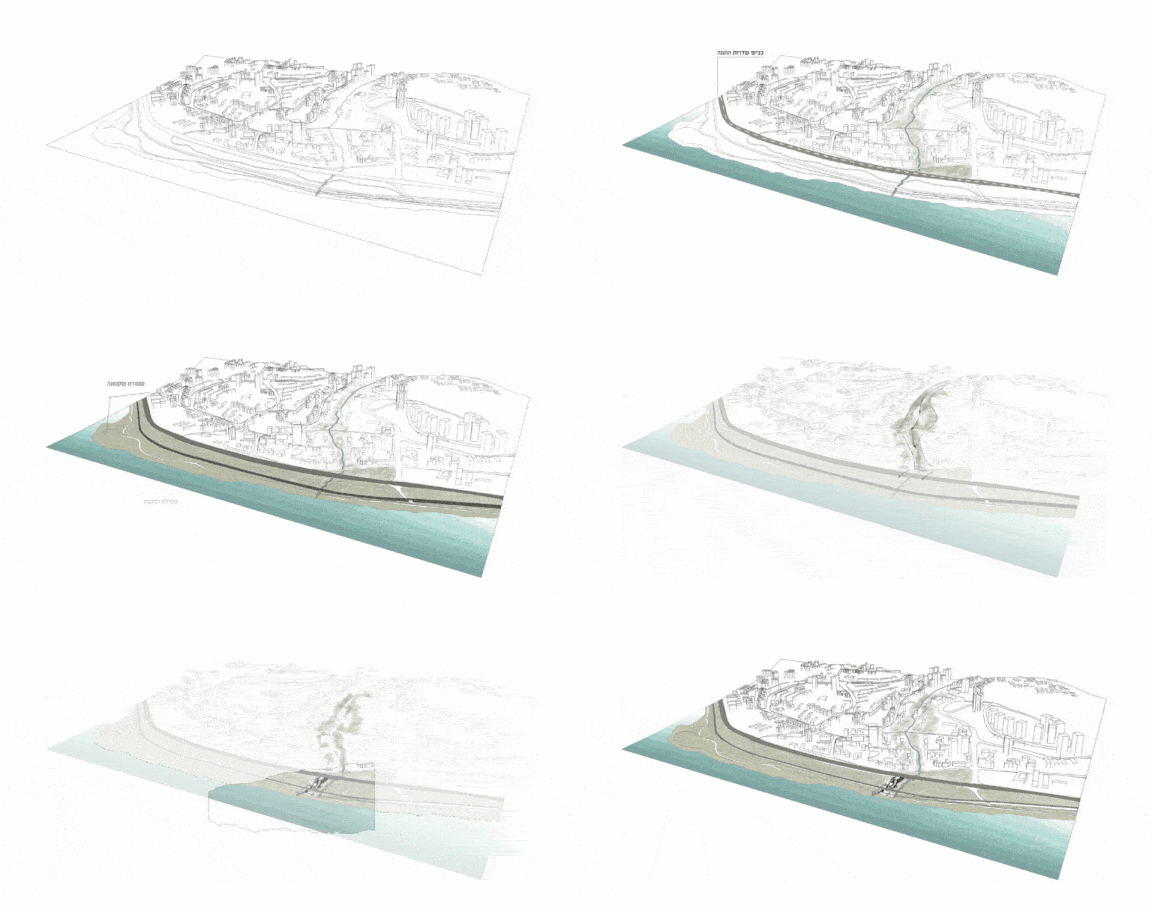
הפרויקט מתמקד ברצועת החוף של חיפה וביחסים שבין העיר לים. העיר והחוף מופרדים באמצעות רצף של תשתיות — מסילת הרכבת, כביש החוף, גדרות והפרשי מפלסים. בתוך המערך הזה, הדרך אל הים אינה ישירה או טבעית, אלא מתכנסת לרצף של חציות ומעברים. המרחב שבין העיר לחוף מתפקד ברובו כאזור מעבר — מקום שחוצים בדרך ליעד אחר, ולא מרחב המזמין עצירה ושהייה.
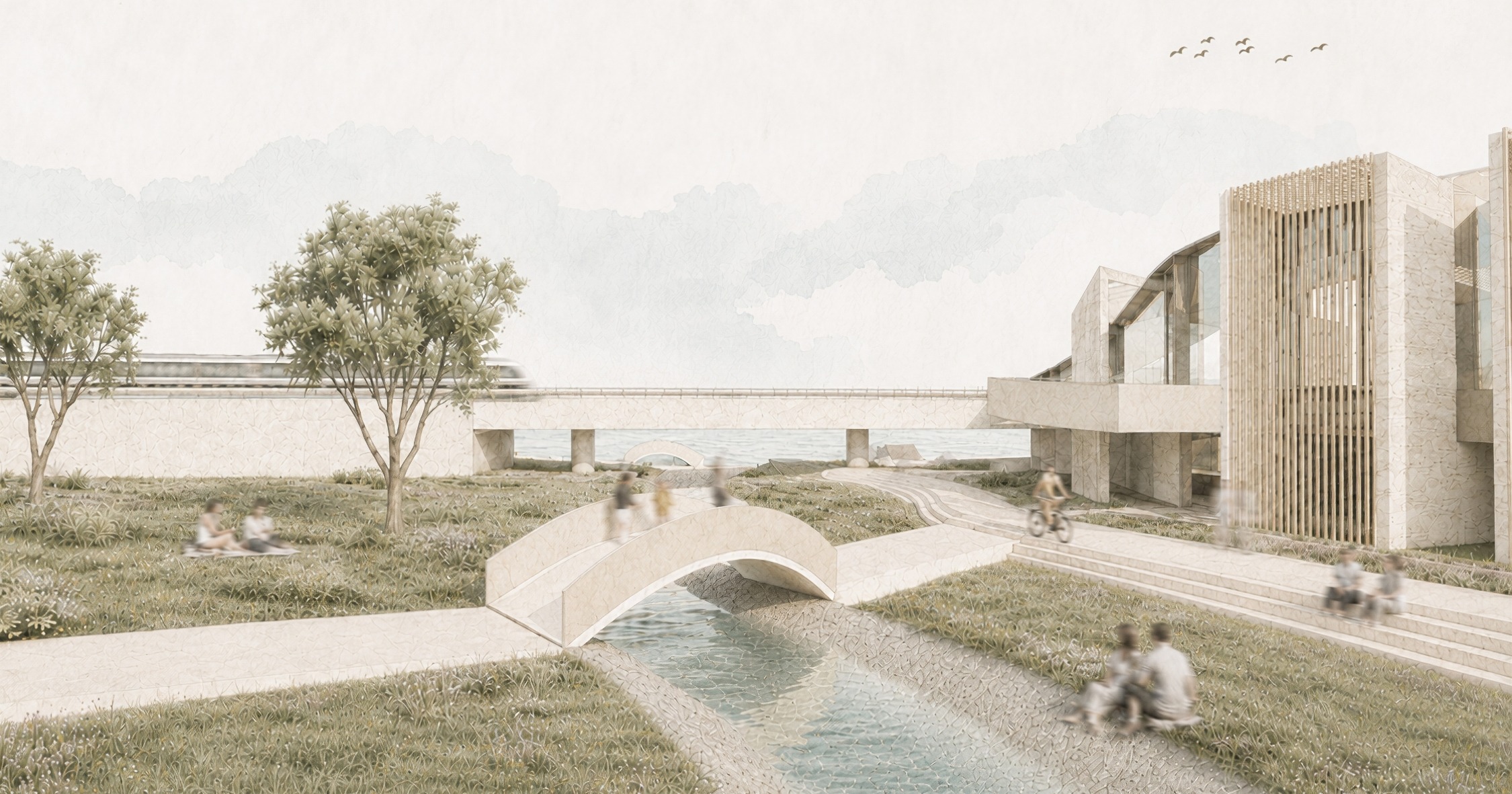
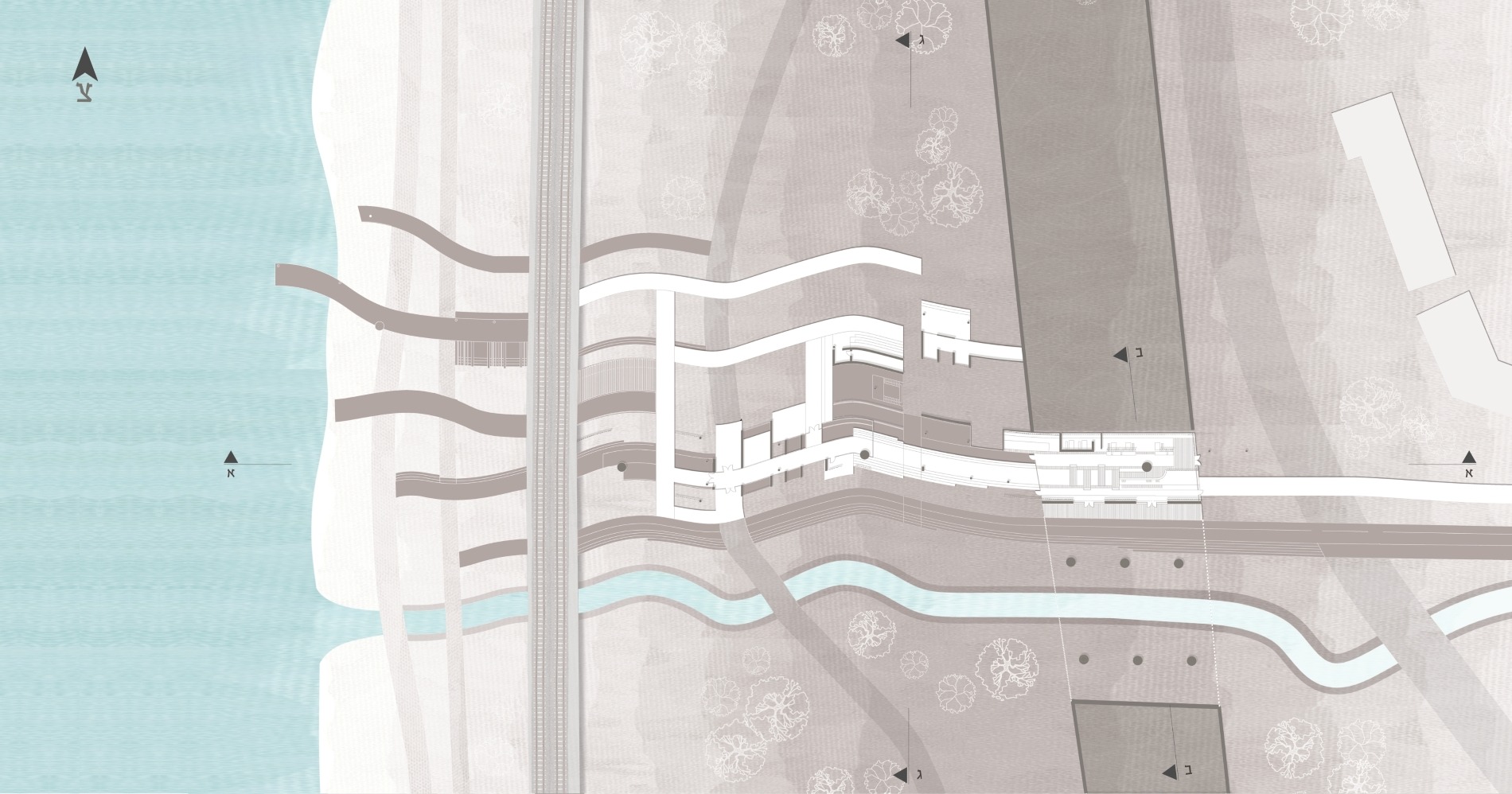
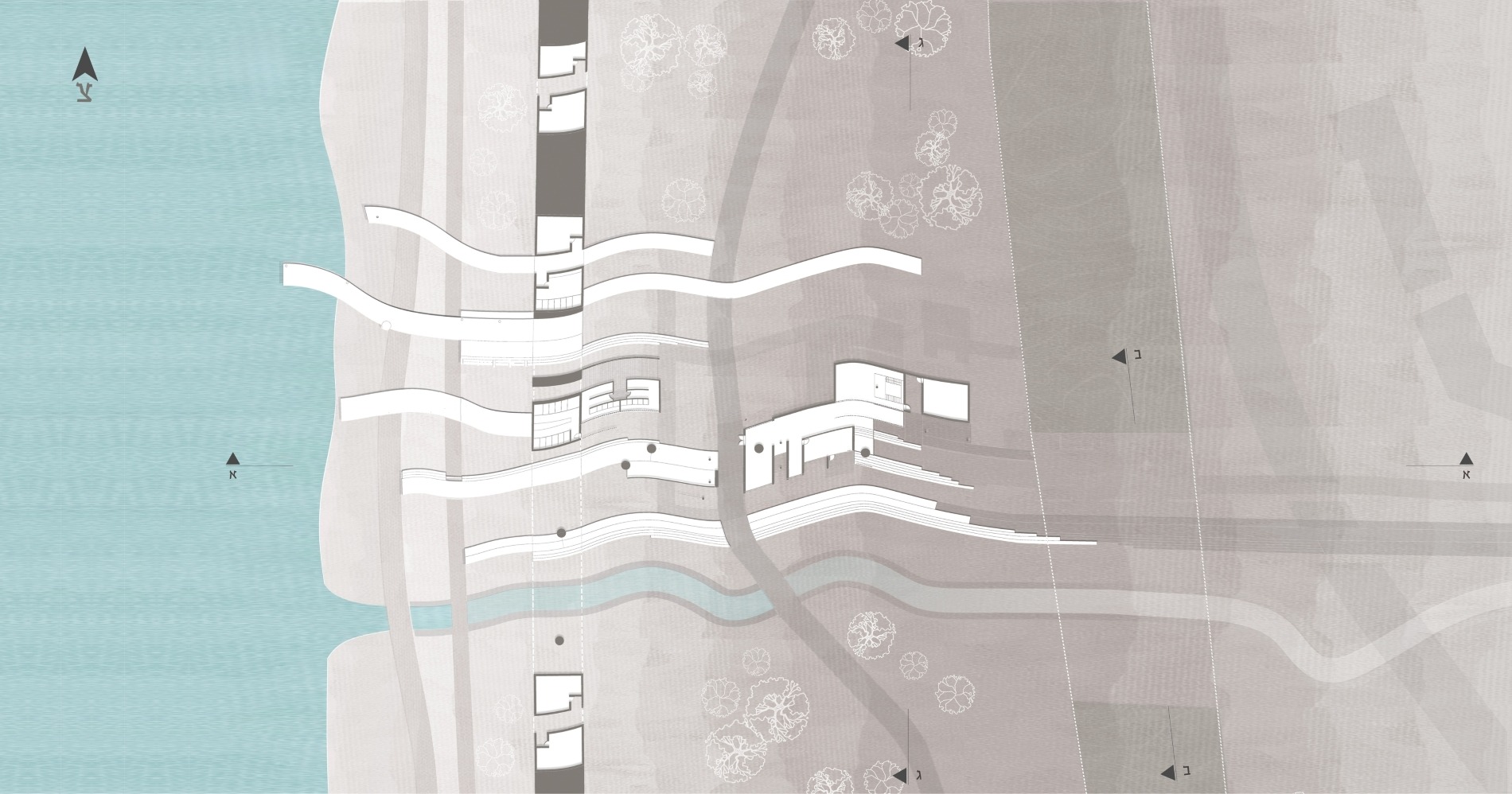
בחינת החסמים הקיימים חשפה את מערכת הניקוז העירונית — רשת של מעברים החוצים כבר כיום את מסילת הרכבת ואת הכביש ומובילים את מי הנחל מן העיר אל הים. מעברים אלו, שכיום הם צרים, חשוכים ונתפסים כתשתית טכנית בלבד, הפכו לבסיס להצעה התכנונית ולנקודת מוצא לחשיבה מחודשת על הדרך אל הים.
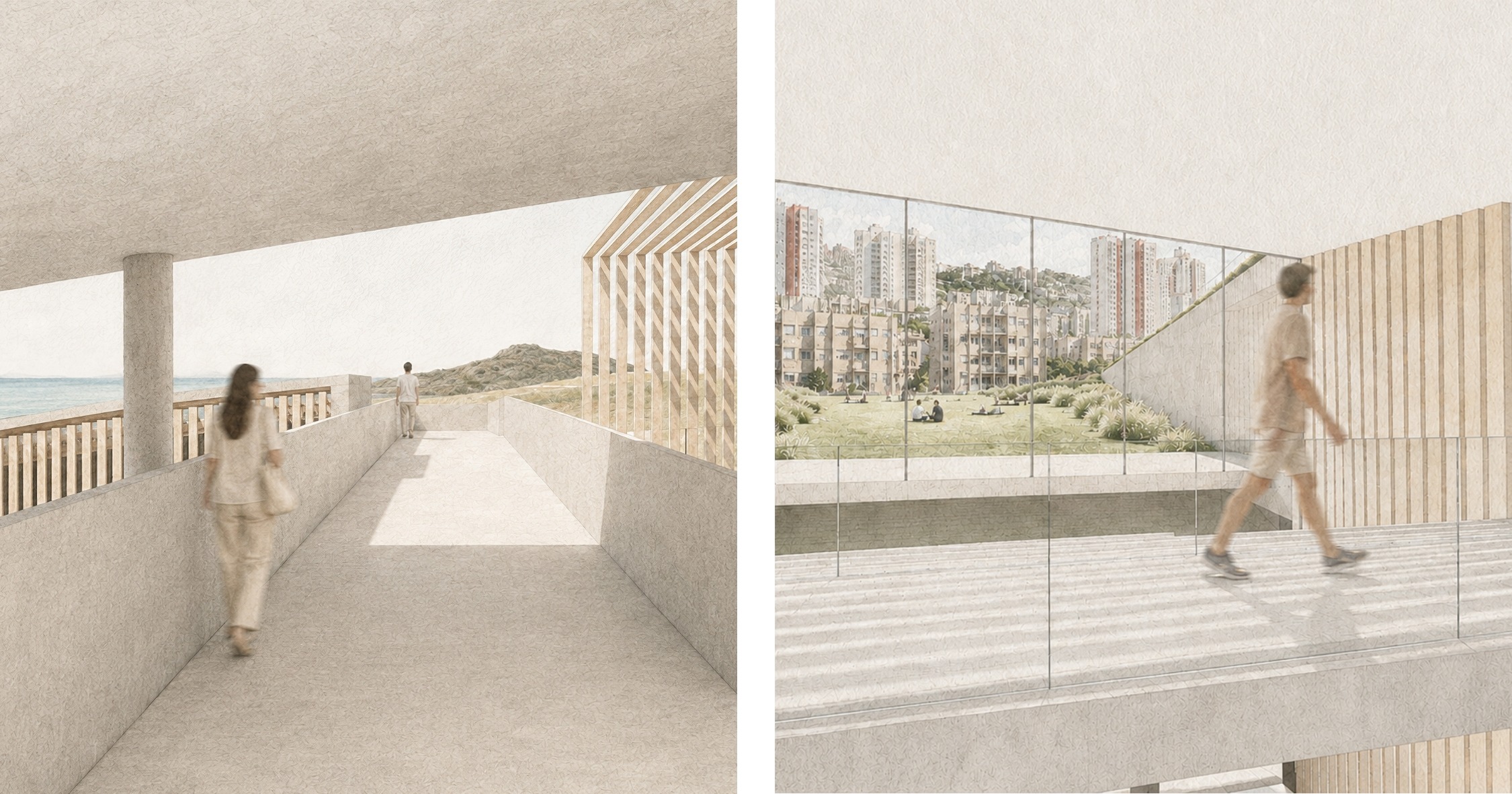
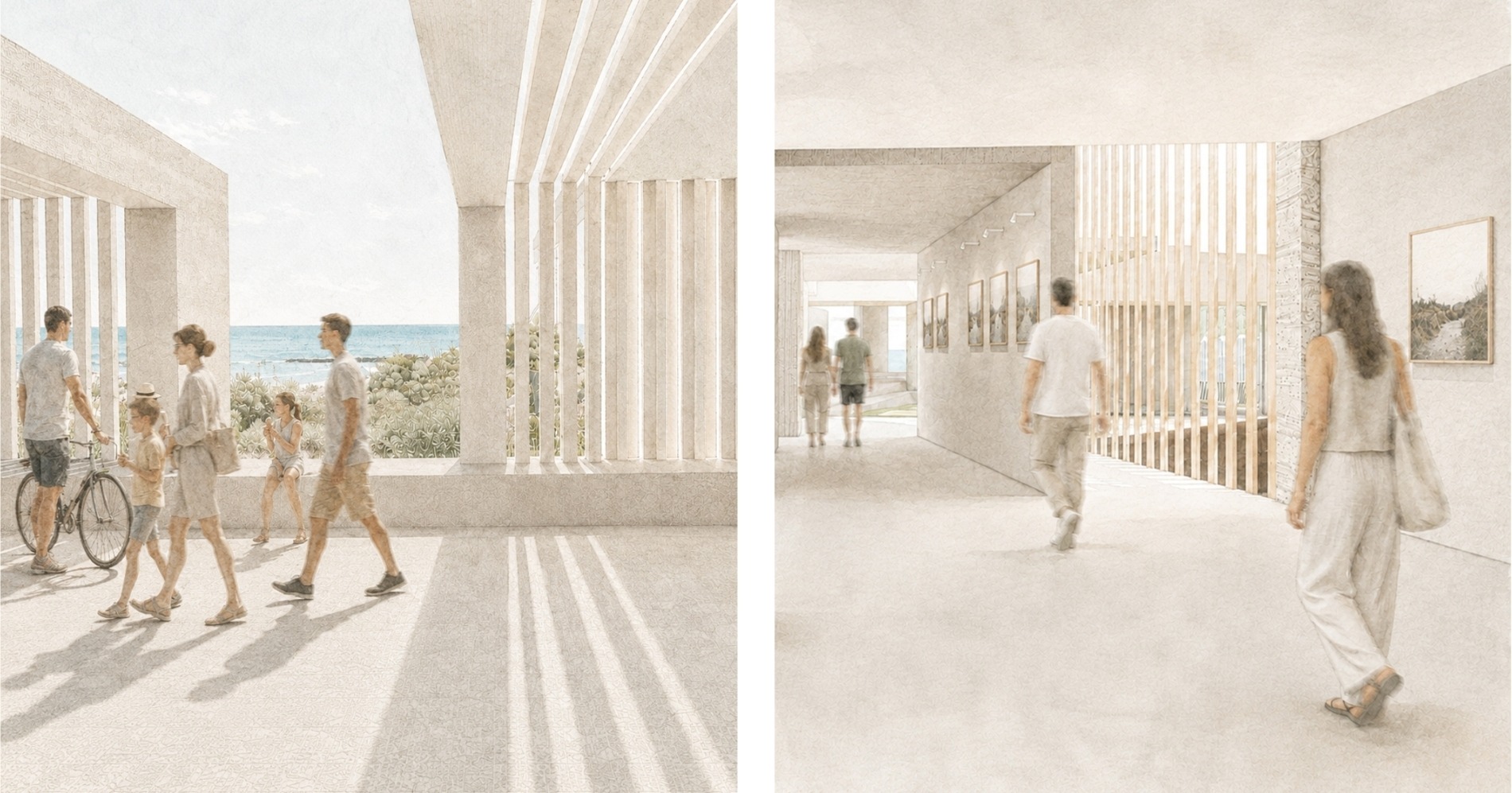
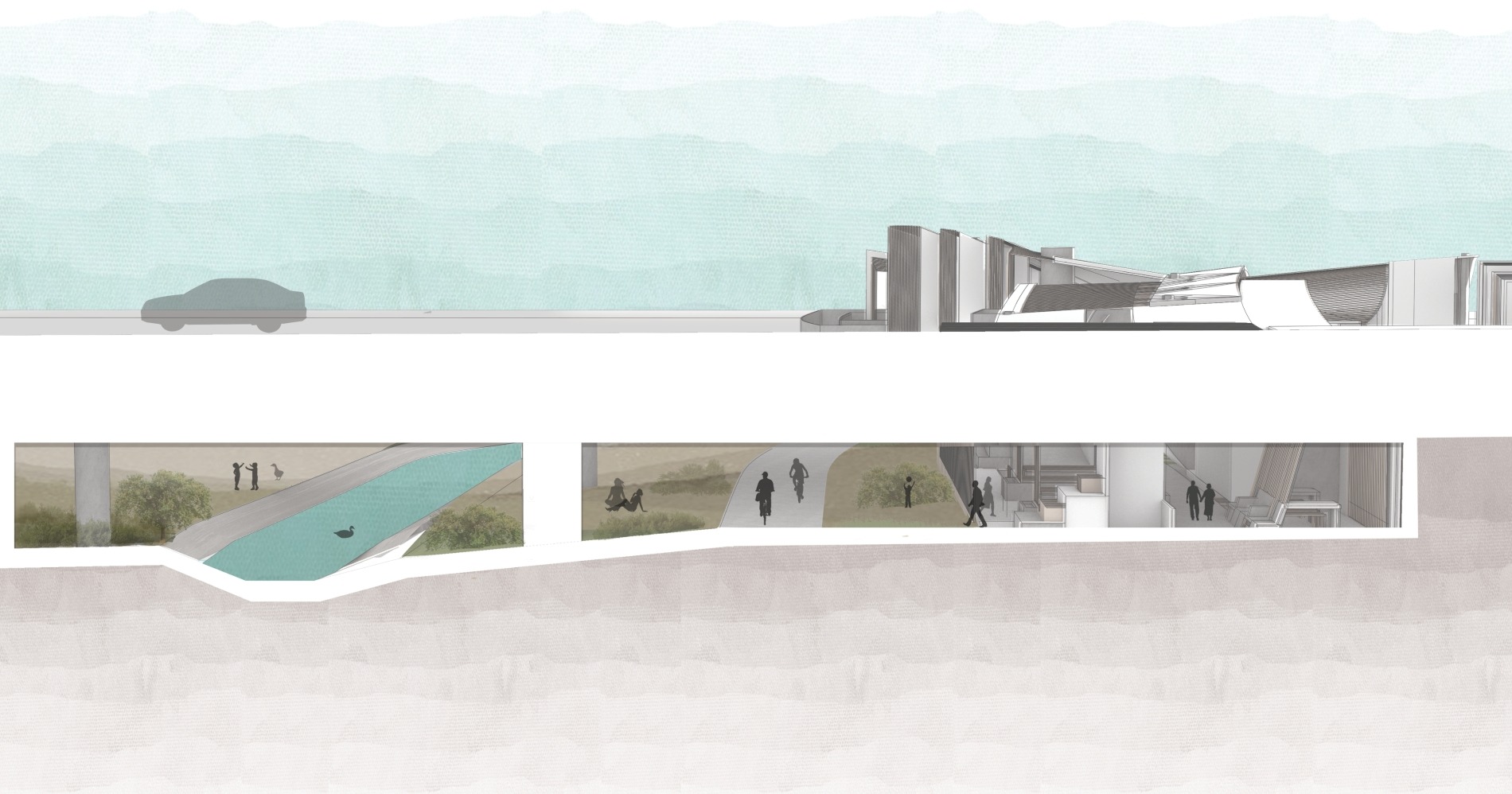
הבחירה בהם אינה נובעת רק מיכולתם ליצור חיבור פיזי בין העיר לחוף. המבנה השקוע, הקירות העוטפים והפתח אל האור והנוף מזכירים מערה — אחת מצורות המחסה הקדומות ביותר. המערה מאפשרת לאדם לחוש עטוף ומוגן, ובו בזמן להתבונן החוצה ולהישאר בקשר עם סביבתו.
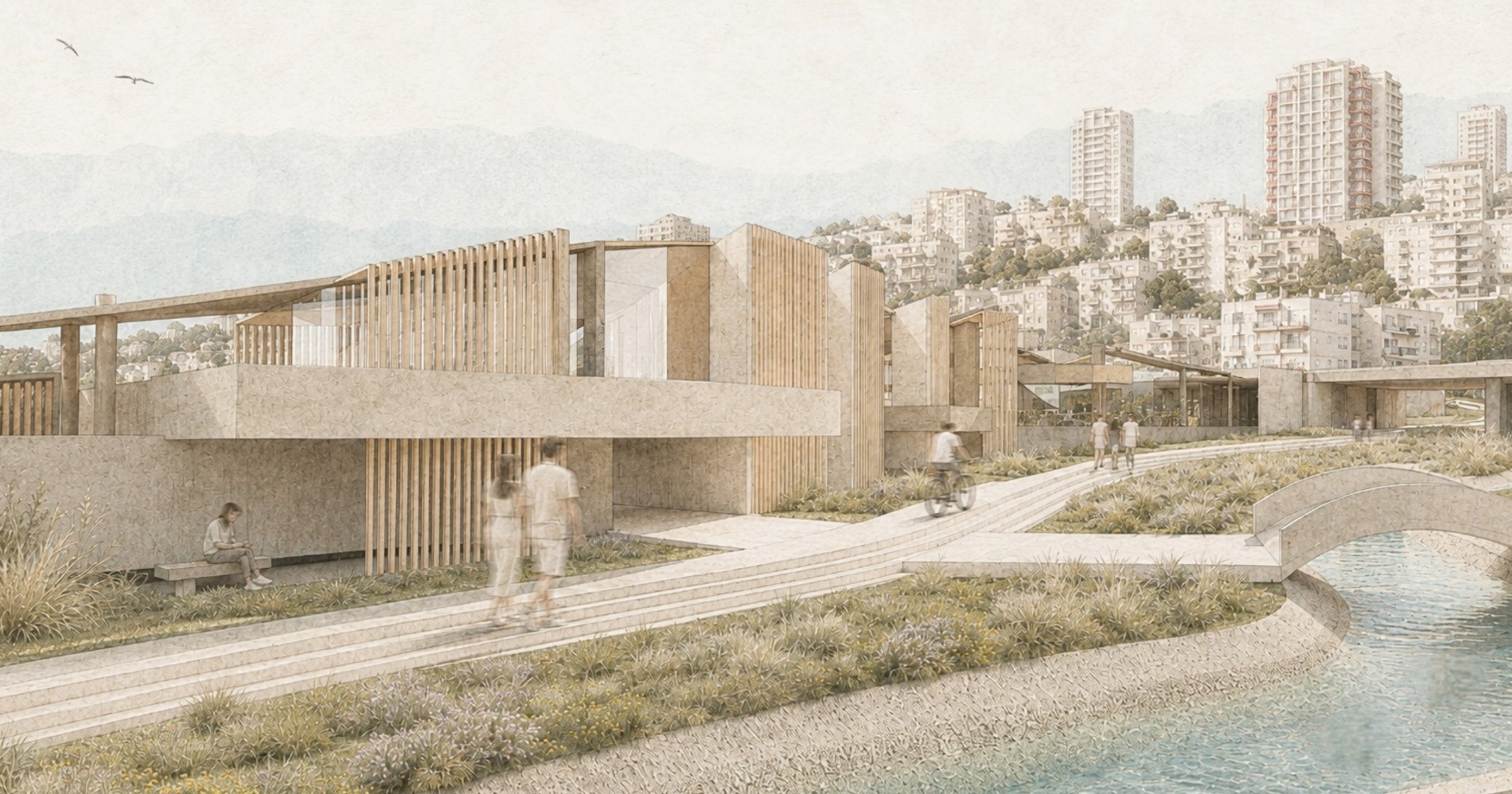
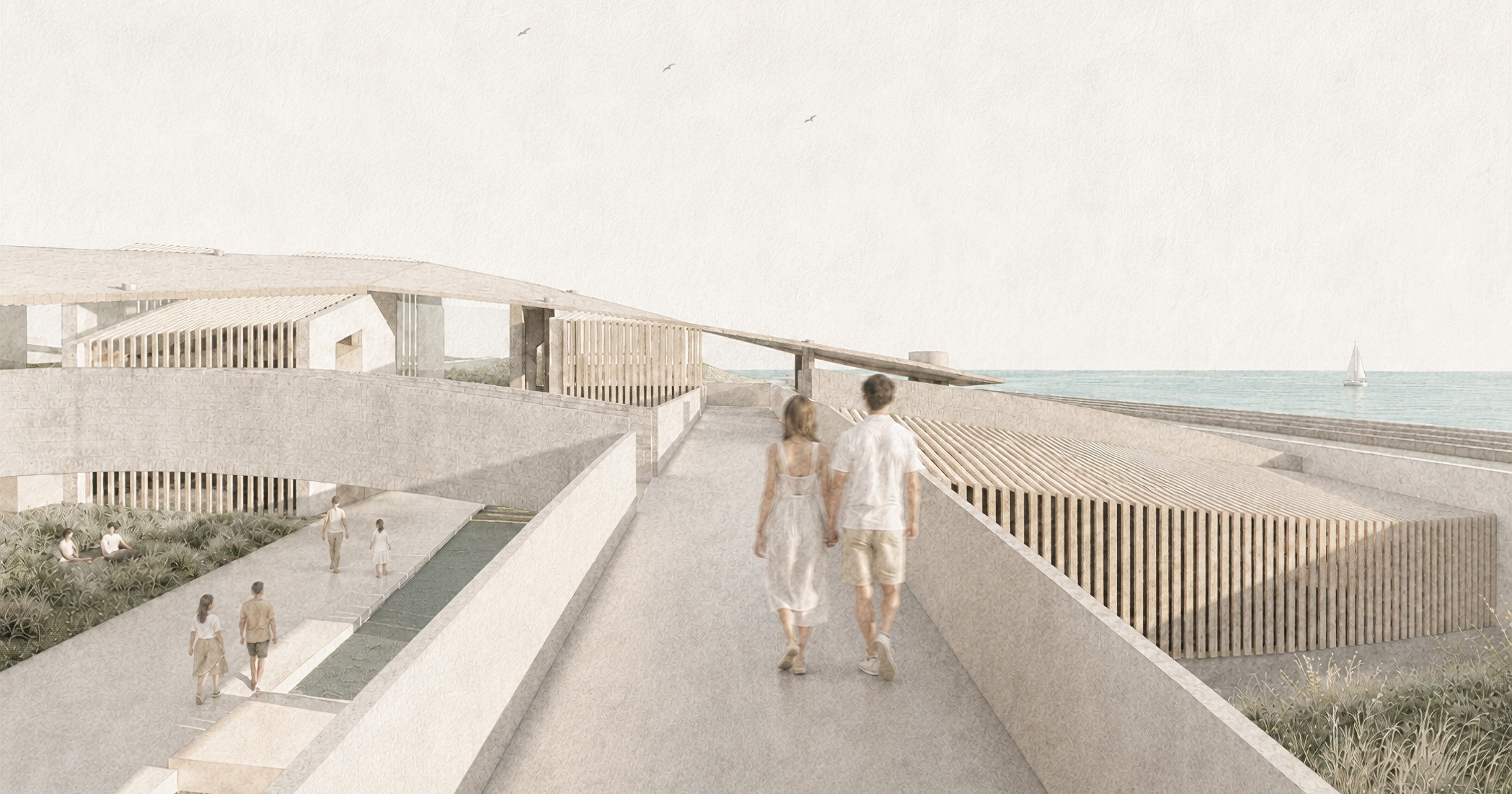
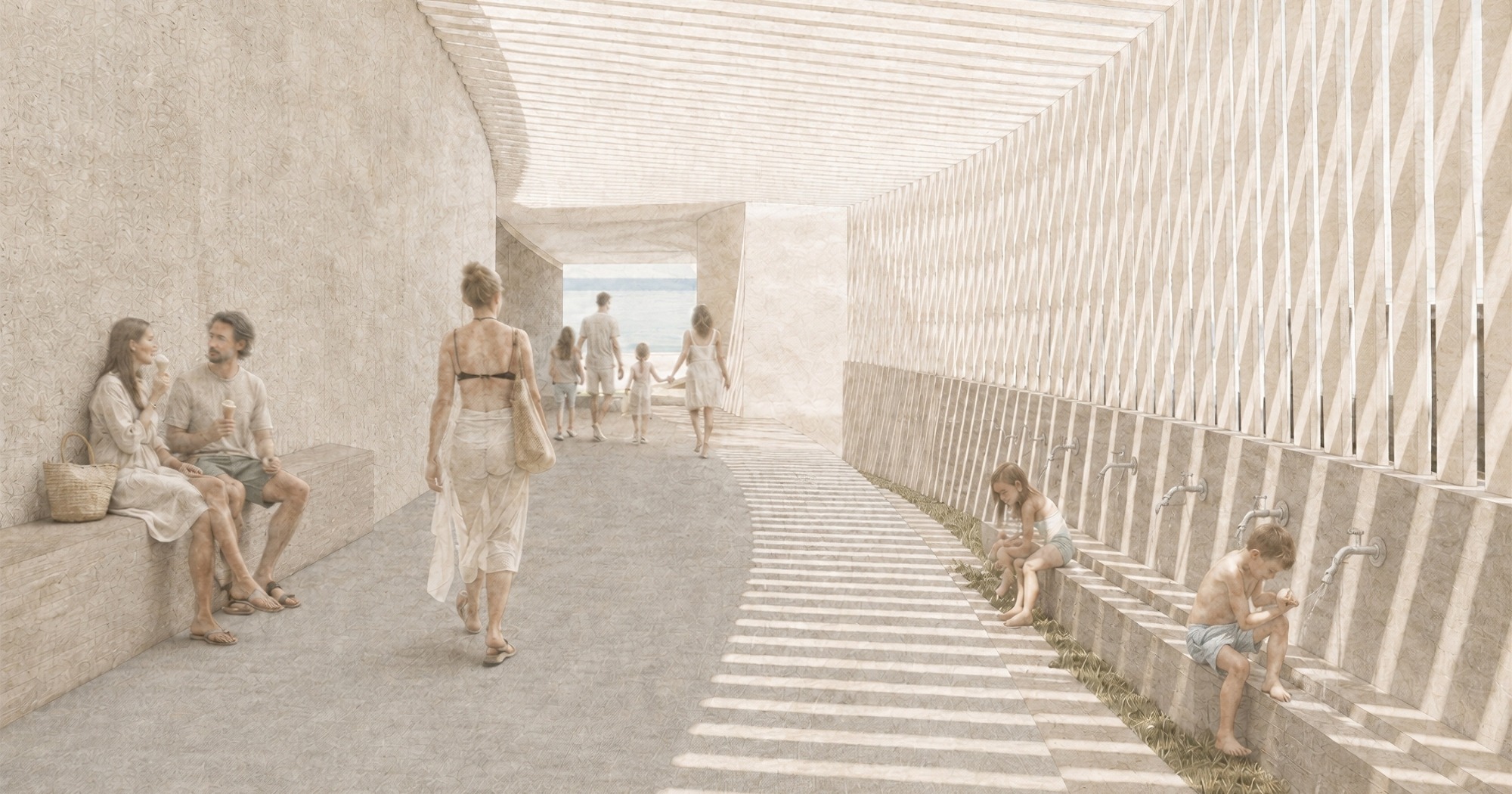
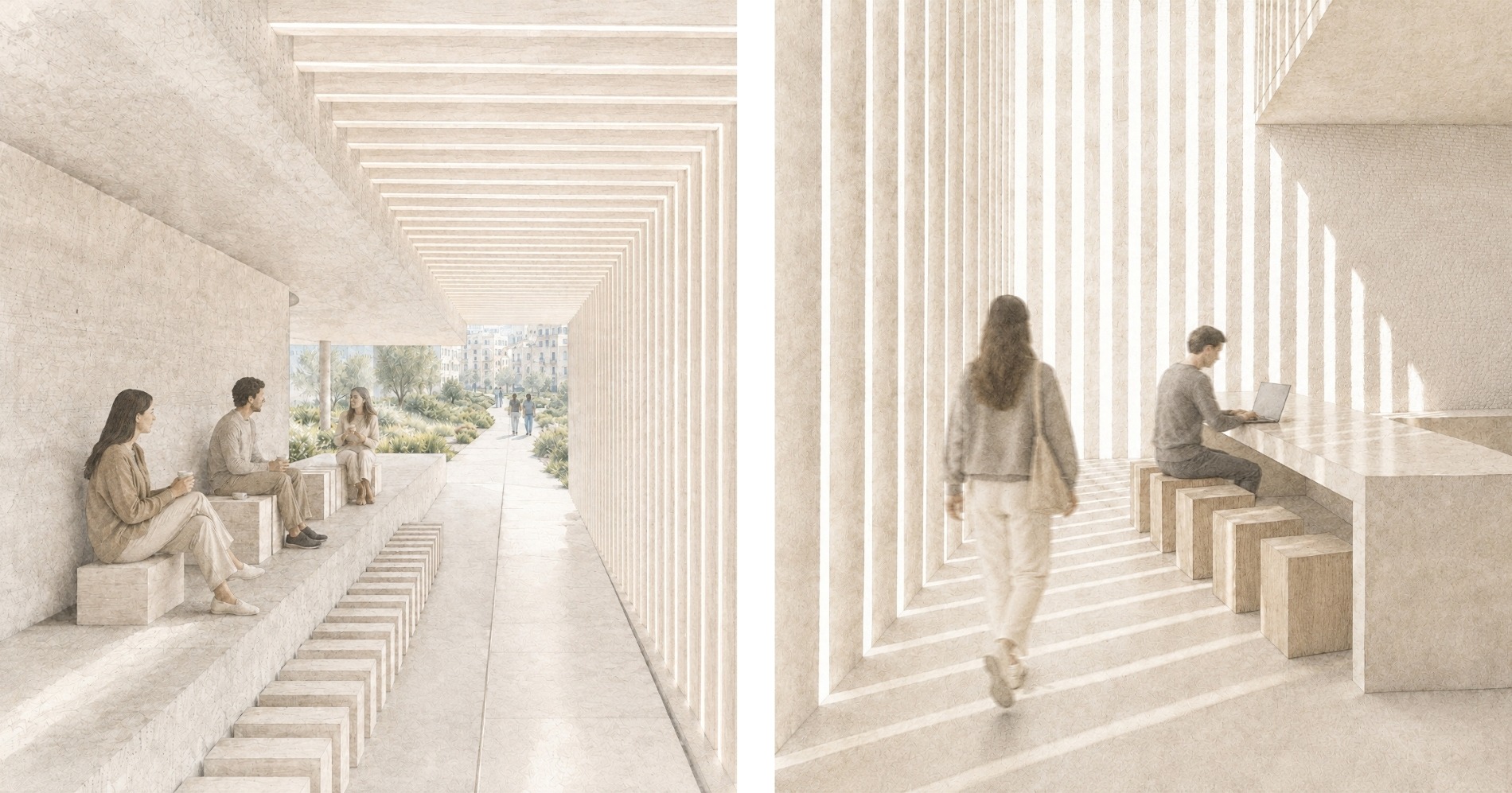
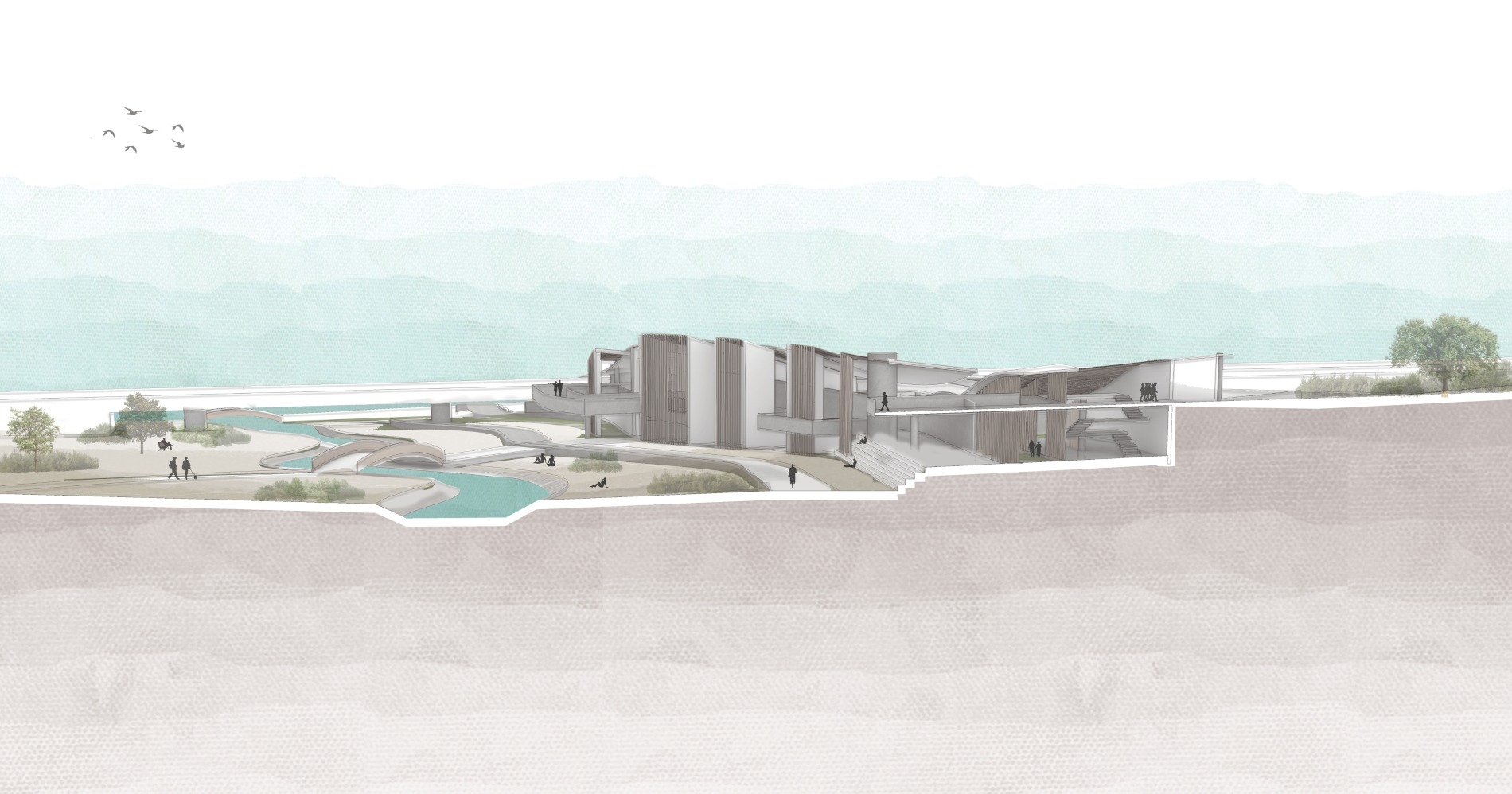
מתוך איכות זו מציע הפרויקט להרחיב את המעברים ולהפוך אותם ממערכת טכנית וסמויה למערכת עירונית פעילה, מוארת ונגישה, המחברת בין השכונות, פארק הכט והחוף. הדרך אל הים הופכת ממסלול של חצייה למרחב בפני עצמו — מרחב של תנועה, שהייה וביטחון.
Walking is an anchor — a space of quiet within a noisy reality. For me, open space has always been associated with freedom, breath, and slowing down. Yet with the outbreak of the war, that same openness also became a source of exposure and insecurity. The tension between freedom and protection became the starting point of the project.
The project focuses on Haifa’s coastline and on the relationship between the city and the sea. The city and the coast are separated by a continuous sequence of infrastructure — the railway, the coastal highway, fences, and changes in elevation. Within this system, the way to the sea is neither direct nor intuitive, but is reduced to a sequence of crossings and passages. The space between the city and the coast functions largely as a transitional zone — a place one passes through on the way to another destination, rather than a space that invites pause and stay.
Examining the existing barriers revealed the urban drainage system — a network of passages that already cross beneath the railway and the highway, carrying stream water from the city toward the sea. These passages, currently narrow, dark, and perceived as technical infrastructure alone, became the basis for the design proposal and a starting point for rethinking the way to the sea.
The choice to work with these passages stems not only from their ability to create a physical connection between the city and the coast. Their sunken form, enclosing walls, and opening toward light and landscape evoke the image of a cave — one of the earliest forms of shelter. A cave allows a person to feel enclosed and protected while still looking outward and remaining connected to the surrounding environment.
Building on this spatial quality, the project proposes expanding the passages and transforming them from a hidden technical system into an active, illuminated, and accessible urban network connecting the neighborhoods, Hecht Park, and the coast. The way to the sea is transformed from a route of crossing into a space in its own right — a space of movement, pause, and safety.
المشي هو مرساة — مساحة من الهدوء داخل واقع صاخب. بالنسبة لي، ارتبط الفضاء المفتوح دائماً بالحرية والتنفس والإبطاء. لكن مع اندلاع الحرب، تحولت هذه الانفتاحية نفسها أيضاً إلى مصدر للشعور بالانكشاف وانعدام الأمان. ومن هذا التوتر بين الحرية والحماية انطلقت فكرة المشروع.
يركز المشروع على الشريط الساحلي في حيفا وعلى العلاقة بين المدينة والبحر. تفصل بين المدينة والساحل سلسلة متواصلة من البنى التحتية — سكة الحديد، الطريق الساحلي، الأسوار وفروق المناسيب. ضمن هذا النسيج، لا يكون الطريق إلى البحر مباشراً أو طبيعياً، بل ينحصر في سلسلة من نقاط العبور والممرات. أما المساحة الواقعة بين المدينة والساحل فتعمل في معظمها كمنطقة انتقال — مكان نعبره في طريقنا إلى وجهة أخرى، لا كحيز يدعو إلى التوقف والمكوث.
كشف فحص العوائق القائمة عن منظومة التصريف الحضري — شبكة من الممرات التي تعبر بالفعل أسفل سكة الحديد والطريق وتنقل مياه الأودية من المدينة إلى البحر. هذه الممرات، التي تبدو اليوم ضيقة ومظلمة ويُنظَر إليها كبنية تحتية تقنية فقط، أصبحت أساس المقترح التصميمي ونقطة انطلاق لإعادة التفكير في الطريق إلى البحر.
لا تنبع أهمية هذه الممرات فقط من قدرتها على خلق اتصال مادي بين المدينة والساحل. فبنيتها الغائرة، وجدرانها المحيطة، وفتحتها المتجهة نحو الضوء والمشهد، تستحضر صورة الكهف — أحد أقدم أشكال المأوى. يمنح الكهف الإنسان شعوراً بالاحتواء والحماية، وفي الوقت نفسه يتيح له النظر إلى الخارج والبقاء على اتصال مع محيطه.
انطلاقاً من هذه الخاصية المكانية، يقترح المشروع توسيع هذه الممرات وتحويلها من منظومة تقنية خفية إلى شبكة حضرية نشطة، مضاءة ومتاحة، تربط بين الأحياء، متنزه هيخت والساحل. وبذلك يتحول الطريق إلى البحر من مسار للعبور إلى فضاء قائم بذاته — فضاء للحركة، والمكوث، والأمان.